


Solution Hub Groups Pages Market Events Blogs Funding Offers Jobs Courses Movies Games Merits
 Terms and Conditions
 Legal & Business Law Agreement
 Child Safety & Policy
 App Installation Guide
 User Guide Page
 Investors & Partnership agreement
 Flowisetech ambassador policy
 About Us
 Flowisetech Earning Guide
 Terms of Use
 Privacy Policy
 Help
Help
 FAQs
FAQs
 Community Guidelines
 Our Purpose
 Withdrawal Terms
 Verification Terms
 Community Policy
Building a Growth Mindset: How Young People Can Prepare for Future Opportunities
The World Is Changing — And So Must You
The world young people are stepping into today is dramatically different from the world their parents entered. Technology evolves at a speed humanity has never witnessed. Entire industries are being replaced or reinvented. Artificial intelligence reshapes how we work, learn, and compete. Opportunities that once took decades to build now emerge overnight — and disappear just as quickly.
But while the world evolves, one thing remains true: young people need the right mindset to thrive.
Not just talent.
Not just luck.
Not just intelligence.
The greatest advantage anyone can have — especially a young person preparing for adulthood — is a growth mindset.
A growth mindset is not a slogan.
It is not motivational hype.
It is a powerful psychological foundation that shapes resilience, learning ability, creativity, performance, and long-term success.
This deep narrative explores:
-
What a growth mindset truly means
-
Why it matters more today than ever
-
How young people can build it
-
How it prepares you for the future
-
Practical steps, habits, and real-world strategies you can start using right now
Let’s begin this journey.
CHAPTER 1:
Understanding the Growth Mindset — A New Way of Seeing Yourself
What Is a Growth Mindset?
A growth mindset is the belief that:
-
Skills can be developed
-
Intelligence can grow
-
Abilities are expandable
-
Failure is part of learning
-
Effort matters more than natural talent
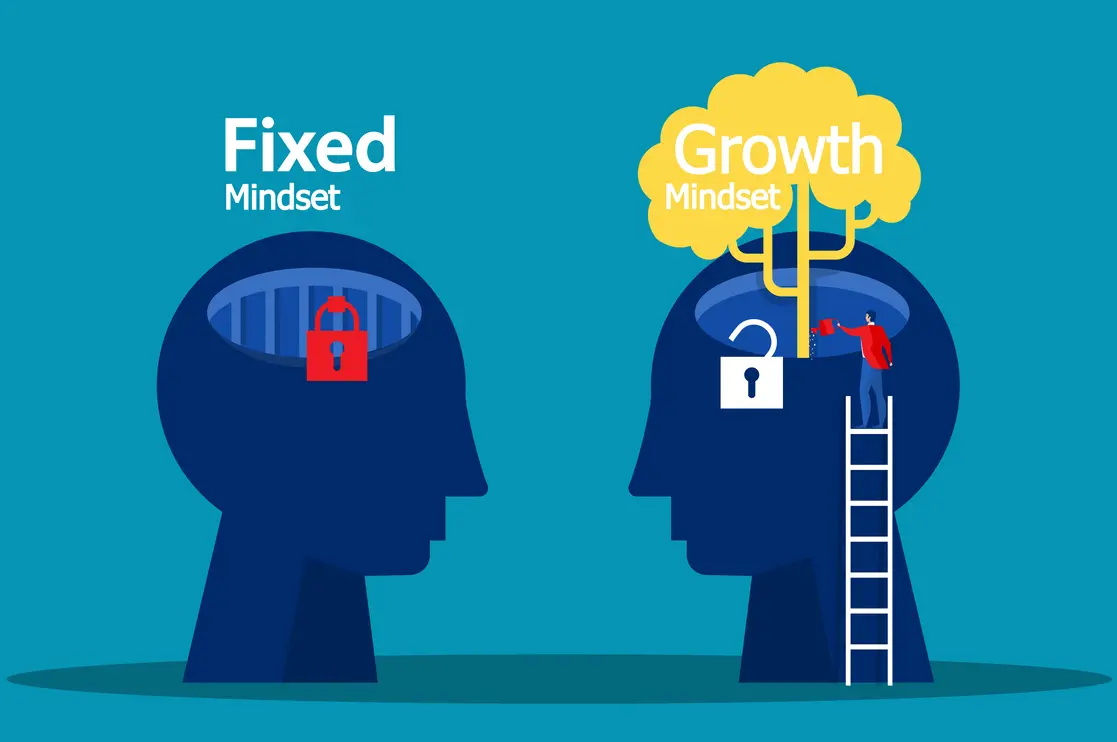
This contrasts with a fixed mindset, which believes:
-
“You’re either smart or not smart.”
-
“You’re either talented or not talented.”
-
“If you fail, you’re not good enough.”
-
“Effort is a sign of weakness.”
The difference between these two mindsets is like the difference between someone who believes their life is a closed box and someone who sees life as a growing tree.
Why a Growth Mindset Is the New ‘Superpower’
Because the world is unpredictable, the future belongs to people who:
-
Adapt fast
-
Learn continuously
-
Try new things
-
Bounce back from failure
-
Solve new problems creatively
These traits naturally come from a growth mindset.
Narrative Example
Imagine two young students: Amara and Daniel.
-
Amara believes she’s “naturally bad at math.”
-
Daniel believes math is a skill he can learn with practice.
Amara avoids challenges. Daniel seeks them.
Amara gives up when it gets hard. Daniel persists.
Years later, Daniel has built confidence, resilience, and problem-solving ability. Amara struggles with anything difficult because her mindset told her she wasn’t enough.
Two similar children.
Two different mindsets.
Two radically different futures.
CHAPTER 2:
Why Young People Need a Growth Mindset More Than Ever
1. The Future of Work Is Unpredictable
Careers that exist today might disappear tomorrow. New careers will emerge that nobody has ever heard of. A growth mindset ensures young people can retrain, relearn, and reinvent themselves.
2. Technology Changes Everything
AI, automation, and digital transformation mean success depends on learning fast — not knowing everything upfront.
3. Opportunities Are Borderless
Remote jobs, global competitions, online learning, and digital entrepreneurship mean young people today compete and collaborate on an international scale.
4. Employers Want Adaptability
Companies now hire for mindset more than degrees.
They look for:
-
Curiosity
-
Creativity
-
Self-awareness
-
Willingness to learn
-
Problem-solving
5. The World Rewards Innovators
People who think differently — especially those unafraid to fail — create products, businesses, art, and solutions that change the world.
A growth mindset is the engine behind innovation.
CHAPTER 3:
How a Growth Mindset Shapes Your Identity, Confidence & Future
The Way You See Yourself Shapes Your Reality
Your mindset influences:
-
What challenges you take
-
How long you persist
-
How you react to setbacks
-
How you interpret criticism
-
What opportunities you attract
Young people need to understand something powerful:
Your identity is not fixed.
Your potential is not fixed.
Your future is not fixed.
How a Growth Mindset Builds Confidence
Confidence comes from:
-
Small wins
-
Overcoming difficulty
-
Seeing improvement
-
Learning from mistakes
Not from already being perfect.
How a Growth Mindset Builds Resilience
With the right mindset, failure becomes:
-
Data
-
Feedback
-
Direction
-
Not a definition of your worth
Young people who embrace growth bounce back faster.
CHAPTER 4:
Practical Ways Young People Can Build a Growth Mindset
This chapter focuses on action steps and habits.
1. Embrace Challenges Instead of Avoiding Them
Challenges are brain exercise.
They make you stronger.
Key Point:
When something is difficult, say:
“This is how I grow.”
2. Replace ‘I Can’t’ With ‘I Can Learn’
The most dangerous sentence a young person can say is:
“I can’t do it.”
Change it to:
“I can learn to do it.”
3. Focus on Progress, Not Perfection
Track small improvements daily.
Small wins create big confidence.
4. Learn to Love Feedback
Feedback is not an attack — it’s information.
Growth-mindset response:
“What can I learn from this?”
“Thank you — this helps me grow.”
5. Redefine Failure
Failure is not the opposite of success.
Failure is part of success.
Ask:
-
What did this teach me?
-
What could I do differently?
-
How can this make me stronger?
6. Build Strong Learning Habits
Young people need habits that support growth:
-
Read daily
-
Watch educational content
-
Ask questions
-
Explore new fields
-
Practice deliberately
7. Surround Yourself With Growth-Minded People
Your environment shapes your mindset.
People who complain, avoid challenges, or mock learning will hold you back.
8. Seek Opportunities That Stretch You
Volunteer.
Join clubs.
Build projects.
Experiment with skills.
Growth happens outside the comfort zone.
CHAPTER 5:
Developing Future-Proof Skills Through a Growth Mindset
A growth mindset helps young people build the skills the future demands.
1. Creativity
Creativity is not talent — it is practice.
Curiosity fuels creativity.
Growth habit:
Ask “why?” and “what if?” every day.
2. Critical Thinking
The future rewards people who can:
-
Analyze information
-
Solve problems
-
Make decisions independently
Critical thinking grows through challenges.
3. Communication
Young people must learn to:
-
Express ideas
-
Speak confidently
-
Write clearly
-
Listen actively
Communication improves through feedback.
4. Collaboration
Adaptability demands the ability to work with people of:
-
Different cultures
-
Different skills
-
Different perspectives
A growth mindset teaches humility and openness.
5. Digital Literacy
Technology will define future success.
Young people need to see tech as learnable — not intimidating.
6. Leadership
Leadership is not about age.
It is about:
-
Responsibility
-
Initiative
-
Emotional intelligence
-
Problem-solving
A growth mindset makes young people step up instead of waiting.
CHAPTER 6:
The Emotional Side of a Growth Mindset
A growth mindset is not only intellectual — it is deeply emotional.
Young people today face:
-
Pressure
-
Anxiety
-
Comparison
-
Social media judgment
A growth mindset helps them:
-
Manage emotions
-
Stay grounded
-
Build inner strength
-
Develop self-belief
1. Overcoming Fear of Failure
Fear shrinks potential.
Growth mindset transforms fear into curiosity.
2. Handling Criticism
Criticism becomes fuel, not pain.
3. Silence the ‘Inner Doubt’ Voice
Every young person has an inner voice that says:
“You’re not enough.”
A growth mindset replaces it with:
“I’m still learning — and I can grow.”
4. Building Emotional Resilience
Hard moments become stepping stones, not roadblocks.
CHAPTER 7:
How Parents, Teachers & Mentors Can Support Growth-Minded Youth
Young people thrive when adults:
-
Praise effort, not talent
-
Encourage curiosity
-
Allow mistakes
-
Ask reflective questions
-
Provide constructive feedback
-
Create safe learning environments
CHAPTER 8:
Growth Mindset in School, Career & Entrepreneurship
In School
-
Try new subjects
-
Ask more questions
-
Expand beyond grades
-
Build study strategies
In Career
-
Look for internships
-
Learn digital skills
-
Build a portfolio
-
Network early
In Entrepreneurship
-
Start small businesses
-
Learn marketing & branding
-
Experiment and iterate
-
Build resilience from setbacks
CHAPTER 9:
Daily Practices to Strengthen a Growth Mindset
1. Journal Something New You Learned Each Day
2. Set Stretch Goals Weekly
3. Reflect on Failures Without Shame
4. Read Books That Expand Your Mind
5. Practice Gratitude to Reduce Fear & Overthinking
6. Monitor Your Self-Talk
7. Track Progress Monthly
CHAPTER 10:
Your Future Begins Now: A Call to Young People
The world is not waiting.
Opportunities are not waiting.
Your potential is not waiting.
Every young person has greatness inside them — but greatness is unlocked through growth, not perfection.
You do not need to be the smartest.
You do not need to be the most talented.
You only need to be willing to learn, improve, and persist.
A growth mindset is the doorway to:
-
better decisions
-
better opportunities
-
better confidence
-
better relationships
-
better future
Your future begins the moment you choose to grow.
KEY TAKEAWAYS (SUMMARY)
1. Mindset shapes your success more than talent.
2. The future belongs to learners, not knowers.
3. Failure is feedback, not a definition.
4. Curiosity is the fuel of growth.
5. Effort builds strength and confidence.
6. Challenges are opportunities for expansion.
7. Feedback is a gift for improvement.
8. The right environment accelerates growth.
9. Daily habits shape your future self.
10. Your potential is unlimited when your mindset is unlimited.
Categories
- Make Money
- Product Review
- Social Media
- Excel
- Graphics design
- Freelancing/Consulting
- E-commerce and Digital Marketing
- Business
- Self Development
- Tips to Success
- Video Editing
- Photo Editing
- Website Promotion
- YouTube
- Computer
- Phone
- Music
- Spirituality & Faith
- School
- Tech & Digital
- Gaming
- News
- Digital Economy / Technology
- Relationship
- Real Estate
- Creative Arts & Design
- Medical
- Causes
- Networking
Read More
A Keyword-Driven Framework simplifies Selenium automation by separating test logic from test data, making scripts easier to manage, maintain, and scale. This framework enhances reusability, reduces code duplication, and supports efficient test execution across multiple scenarios. Learning these automation techniques through Selenium Training in Chennai helps build practical testing expertise,...

A Corporate Family Day is one of the best ways for companies to thank employees and celebrate the people who support them every day. It brings employees, spouses, children, and family members together for a day filled with fun, relaxation, and meaningful interactions. Organising such an event requires careful planning, creative activities, and smooth coordination. This is why many organisations...

Every generation has one advantage that changes everything.For our parents, it was formal education.For some, it was oil, factories, or government jobs. For this generation, it is the internet. Not because it’s trendy.Not because it’s entertaining.But because it has quietly removed the biggest barriers that once limited human potential: location, capital, permission, and...

The global transition toward electric mobility and renewable energy is significantly increasing the demand for advanced battery technologies. Power battery adhesives have become an essential component in lithium-ion battery manufacturing, providing structural bonding, thermal management, electrical insulation, vibration resistance, and enhanced safety. These specialized adhesives are widely...

1. Pick One Skill (Don’t Try Everything) You don’t need 10 skills—you need one that solves a real problem. Examples: Writing (blog posts, ads, emails) Graphic design (logos, social media posts) Web development Social media management Video editing Focus on something businesses already pay for. 2. Define a Specific Offer Don’t...