

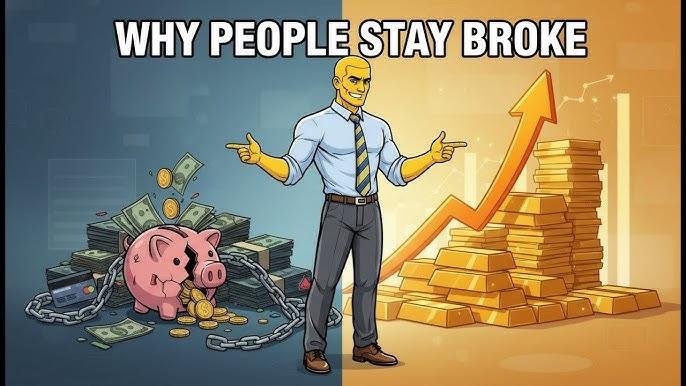
Why Most Youth Stay Broke Even With Skills (And How to Escape It)

In today’s digital economy, skills are more accessible than ever. Millions of young people have learned graphic design, coding, content creation, photography, writing, and digital marketing—often through free or low-cost online resources.
Yet a difficult reality remains:
Many skilled young people are still financially struggling.
This raises an important question:
If skills are the new currency, why are so many talented youths still broke?
The answer lies not in the absence of ability, but in misalignment between skills, strategy, and mindset.
1. Skills Without Market Demand Don’t Pay
Not all skills are equally valuable in the marketplace.
Many young people learn skills based on:
-
What looks exciting
-
What friends are doing
-
What is trending online
Instead of what businesses are actively paying for.
A skill becomes profitable only when it:
-
Solves a real problem
-
Saves time or money
-
Increases revenue or visibility
The market rewards usefulness, not effort.
How to escape:
Before investing months learning a skill, ask:
-
Who will pay for this?
-
What problem does it solve?
-
How urgent is that problem?
Learn skills that are in demand, not just popular.
2. Learning Without Monetisation Strategy
Many youths remain in a cycle of endless learning:
-
Another course
-
Another certificate
-
Another tutorial
But no clear plan for turning knowledge into income.
Skill acquisition without application creates confidence—but not cash.
How to escape:
-
Decide how the skill will make money before learning it
-
Identify service offers, products, or outcomes
-
Set a deadline to apply what you learn
Skills must move from theory to transaction.
3. Poor Positioning and Visibility
A skill that cannot be seen might as well not exist.
Many young people:
-
Have no online presence
-
Don’t showcase their work
-
Avoid marketing themselves
-
Wait to be “perfect”
Meanwhile, less skilled but more visible individuals get the opportunities.
How to escape:
-
Build a simple portfolio (even mock projects count)
-
Share your work publicly and consistently
-
Position yourself as a solution, not just a learner
Visibility is a financial skill.
4. Pricing Fear and Undervaluation
A major reason skilled youths stay broke is fear:
-
Fear of charging “too much”
-
Fear of rejection
-
Fear of being compared
This leads to underpricing, free work, or exploitation.
Low pricing attracts low-commitment clients and unsustainable workloads.
How to escape:
-
Price based on value, not emotion
-
Understand the business impact of your skill
-
Increase prices as your competence and results grow
Confidence in pricing reflects confidence in value.
5. Working Alone Instead of Building Systems
Many skilled youths turn their skill into a job, not a business.
They:
-
Trade time for money
-
Handle everything themselves
-
Have no processes or structure
This caps income and causes burnout.
How to escape:
-
Create repeatable processes
-
Package your skill into services or products
-
Explore delegation, automation, or collaboration
Wealth grows when effort is multiplied.
6. Poor Financial Management
Some youths earn but still struggle financially due to:
-
No budgeting
-
No reinvestment
-
Impulse spending
-
Lifestyle inflation
Earning money without managing it properly leads back to zero.
How to escape:
-
Separate personal and business income
-
Reinvest early profits into growth
-
Track expenses and income consistently
Income creates opportunity. Management preserves it.
7. Waiting for External Validation
Many skilled youths wait for:
-
Government jobs
-
Big clients
-
Recognition
-
Perfect opportunities
This waiting delays growth.
The market rewards those who act, not those who wait.
How to escape:
-
Start small
-
Build proof of work
-
Create your own opportunities
Momentum is created through action.
The Mindset Shift: From Skilled to Strategic
Skills are powerful—but strategy determines outcome.
A skilled person asks:
“What can I do?”
A strategic person asks:
“What problem can I solve, for who, and at what price?”
This shift transforms talent into income.
Practical Escape Framework for Youth
To break out of financial stagnation:
-
Choose a high-demand skill
-
Define a clear monetisation path
-
Build visibility and credibility
-
Charge based on value
-
Systemise your work
-
Manage and reinvest earnings
-
Act consistently, not occasionally
Final Thought
Being skilled is no longer enough.
In a competitive, digital world, the difference between struggling talent and successful professionals is not intelligence—it is execution, positioning, and strategy.
Skills open the door.
Strategy keeps it open.
And for today’s youth, escaping financial struggle begins not with learning more—but with using what they already know more intentionally.