

Solution Hub Groups Pages Market Events Blogs Funding Offers Jobs Courses Movies Games Merits
 Terms and Conditions
 Legal & Business Law Agreement
 Child Safety & Policy
 App Installation Guide
 User Guide Page
 Investors & Partnership agreement
 Flowisetech ambassador policy
 About Us
 Flowisetech Earning Guide
 Terms of Use
 Privacy Policy
 Help
Help
 FAQs
FAQs
 Community Guidelines
 Our Purpose
 Withdrawal Terms
 Verification Terms
 Community Policy
Programming Languages Every Beginner Should Learn in 2026
The tech industry continues to grow rapidly, creating opportunities for people who are ready to learn valuable digital skills. One of the best skills anyone can start with in 2026 is programming.
But with so many programming languages available today, beginners often get confused about where to start.
The truth is simple: you do not need to learn every language. You only need to start with the right ones based on your goals.
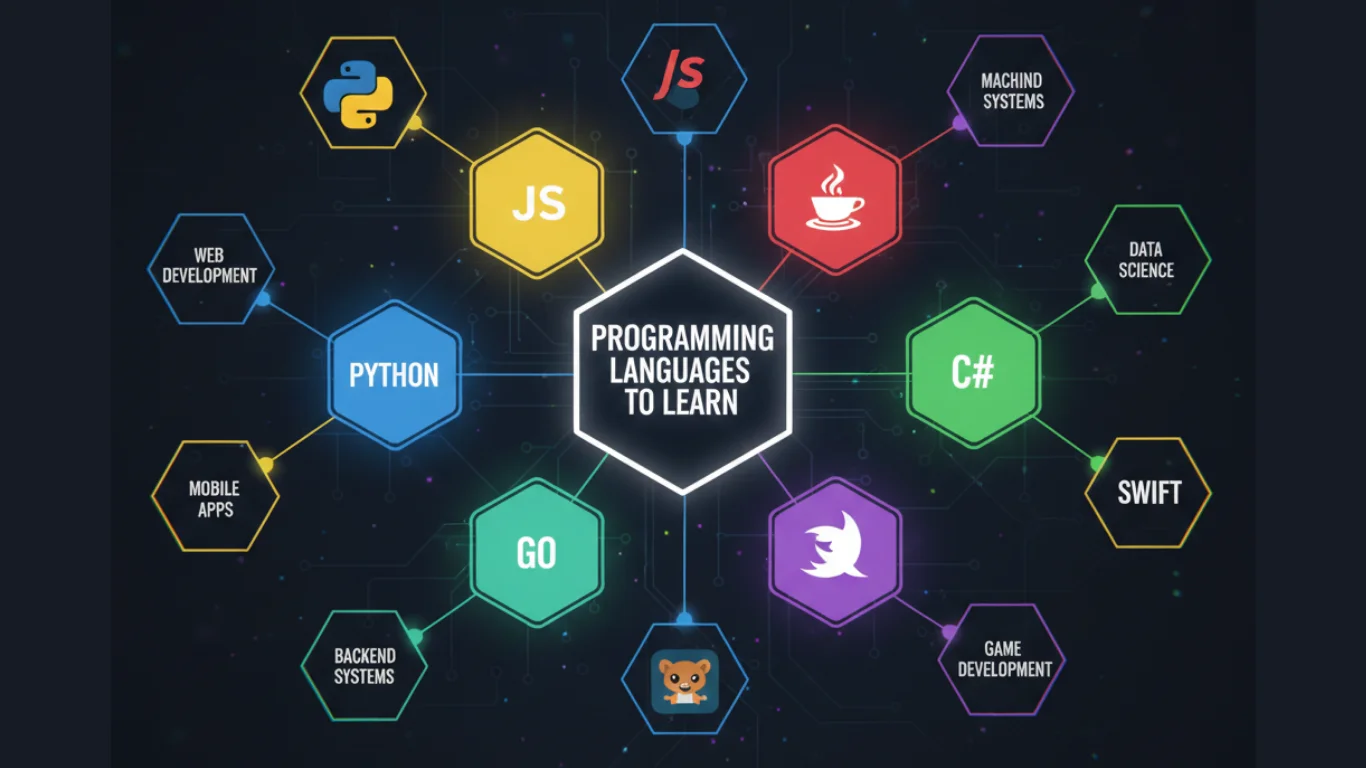
Here are some of the best programming languages every beginner should consider learning in 2026.
1. Python — The Best Language for Beginners
Python remains one of the easiest and most powerful programming languages in the world.
Its simple syntax makes it beginner-friendly, while its versatility allows developers to build websites, automation tools, AI systems, and data analysis projects.
Why Learn Python?
-
Easy to read and understand
-
Perfect for beginners
-
Used in Artificial Intelligence and Machine Learning
-
Great for automation and backend development
-
High demand in the job market
Real-Life Example
Many beginners start earning online by using Python to automate tasks, analyze data, or build simple applications for businesses.
If you are completely new to coding, Python is one of the safest places to start.
2. JavaScript — The Language of the Web
If you dream of building websites, web apps, or interactive platforms, JavaScript is essential.
Almost every modern website uses JavaScript in some way.
Why Learn JavaScript?
-
Powers modern websites
-
Used for frontend and backend development
-
Huge demand for web developers
-
Works with popular frameworks like React and Node.js
Real-Life Example
Platforms like Facebook, YouTube, and Netflix rely heavily on JavaScript technologies.
A beginner who learns JavaScript can eventually build complete websites and even mobile apps.
3. HTML & CSS — The Foundation of Web Development
Although technically not programming languages, HTML and CSS are important for anyone entering tech.
HTML structures websites, while CSS designs them.
Why Learn HTML & CSS?
-
Easy to learn
-
Helps beginners understand how websites work
-
Important before learning advanced web development
Real-Life Example
Most successful web developers started by learning how to create simple web pages using HTML and CSS before moving to JavaScript.
4. Java — Strong and Reliable
Java has existed for decades and is still widely used worldwide.
It powers Android apps, enterprise systems, banking software, and many large platforms.
Why Learn Java?
-
Excellent for app development
-
Strong career opportunities
-
Used by large companies
-
Teaches strong programming fundamentals
Real-Life Example
Many banking systems and Android applications are built using Java technologies.
For beginners interested in mobile app development, Java remains valuable.
5. SQL — The Language of Databases
Almost every application stores data, and SQL helps developers manage that data.
Even non-programmers benefit from understanding databases.
Why Learn SQL?
-
Used in nearly every software system
-
Important for data analysis and backend development
-
Valuable for tech jobs beyond programming
Real-Life Example
Businesses use SQL daily to manage customer records, sales reports, and website data.
A beginner who understands SQL gains a major advantage in tech.
6. C# — Great for Game and Software Development
C# is popular among game developers and software engineers.
It works especially well with the Unity game engine.
Why Learn C#?
-
Excellent for game development
-
Used in desktop applications
-
Strong support from Microsoft
-
Beginner-friendly structure
Real-Life Example
Many mobile and PC games are built with C# and Unity.
If you love gaming or software creation, C# is worth exploring.
How to Choose the Right Language
Before choosing a programming language, ask yourself:
-
Do I want to build websites?
-
Do I want to create mobile apps?
-
Am I interested in AI or automation?
-
Do I want to become a game developer?
Your goals will help you decide where to focus.
Final Thoughts
Learning programming in 2026 is no longer only for computer scientists. Students, freelancers, entrepreneurs, and young people can all benefit from coding skills.
The most important step is not choosing the “perfect” language — it is starting consistently and practicing regularly.
Technology rewards people who are willing to learn and adapt.
Start small, stay consistent, and your skills can open doors to opportunities you never imagined.

Categories
- Make Money
- Product Review
- Social Media
- Excel
- Graphics design
- Freelancing/Consulting
- E-commerce and Digital Marketing
- Business
- Self Development
- Tips to Success
- Video Editing
- Photo Editing
- Website Promotion
- YouTube
- Computer
- Phone
- Music
- Spirituality & Faith
- School
- Tech & Digital
- Gaming
- News
- Digital Economy / Technology
- Relationship
- Real Estate
- Creative Arts & Design
- Medical
- Causes
- Networking
Read More
Confidence is no longer a “nice-to-have” trait for young people—it is a survival skill. For young Nigerians growing up in a fast-changing, highly competitive world, confidence can be the difference between giving up early and pushing forward despite obstacles. From crowded classrooms and limited opportunities to social media pressure and economic uncertainty, the journey to...

Why Mental Health and Well-being Matter In today’s fast-moving world, many people struggle with stress, anxiety, or burnout. Just like physical fitness, mental health requires consistent care and attention. By adopting healthy routines, practicing mindfulness, and using supportive tools, you can build resilience, reduce stress, and enjoy a more fulfilling life. Key Strategies to Improve...

The Real Advantage in a Rapidly Changing World For a long time, success was associated with being “smart.”High grades. Quick answers. Natural intelligence. But in today’s world, learning fast beats being smart—every single time. Because the world no longer rewards what you already know.It rewards how quickly you can adapt, relearn, and evolve. The Myth of Being...

The digital entertainment industry has experienced significant changes in recent years, and online platforms continue to influence how people interact with games and interactive experiences. Casino gaming has become part of this wider digital transformation, where technology, design, and user experience play important roles. Dewa33 represents an example of how modern online entertainment...

The tech industry is one of the few fields where skills matter more than degrees. Many successful developers, designers, and tech entrepreneurs started their careers without a university diploma. Whether you couldn’t attend university or simply prefer a different path, this guide will show you how to start a tech career without a degree, step by step. 1. Identify Your Tech...