


Solution Hub Groups Pages Market Events Blogs Funding Offers Jobs Courses Movies Games Merits
 Terms and Conditions
 Legal & Business Law Agreement
 Child Safety & Policy
 App Installation Guide
 User Guide Page
 Investors & Partnership agreement
 Flowisetech ambassador policy
 About Us
 Flowisetech Earning Guide
 Terms of Use
 Privacy Policy
 Help
Help
 FAQs
FAQs
 Community Guidelines
 Our Purpose
 Withdrawal Terms
 Verification Terms
 Community Policy
Why AI-Native Software Development Is Changing How Apps Are Built
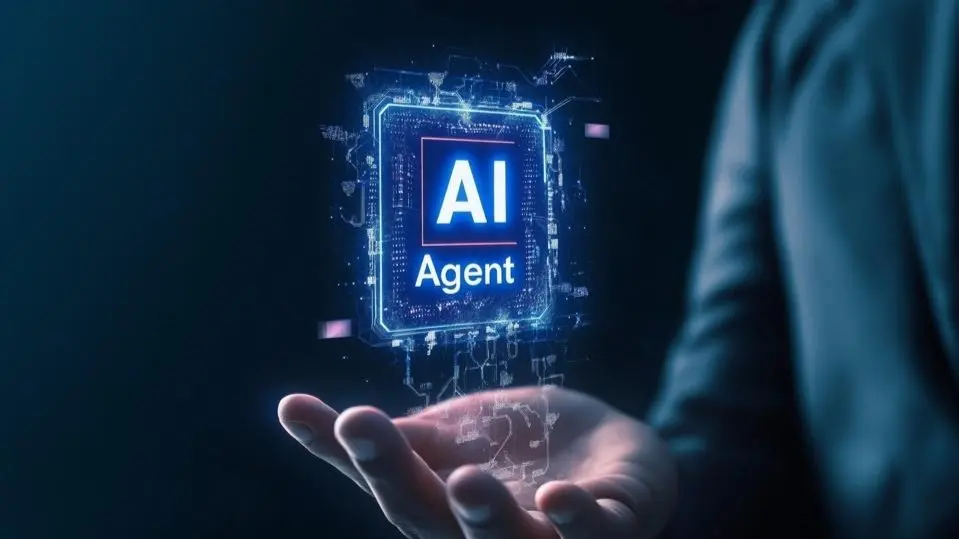
Software development is moving from writing every line of code to designing, directing, and validating intelligent systems.
For decades, building software followed a relatively predictable process.
A developer studied the requirements, designed the architecture, wrote the code, tested it, fixed bugs, deployed the application, and maintained it.
The tools changed.
Programming languages evolved.
Frameworks became more powerful.
Cloud computing transformed deployment.
Low-code platforms simplified certain tasks.
But one fundamental assumption remained:
Humans were responsible for producing most of the software.
AI is beginning to challenge that assumption.
In 2026, artificial intelligence is becoming deeply integrated into the software-development lifecycle—not simply as a coding assistant, but as an active participant in planning, implementation, testing, debugging, documentation, deployment, and maintenance.
This is the emergence of AI-native software development.
And it could fundamentally change how applications are built.
What Does “AI-Native” Actually Mean?
AI-assisted development and AI-native development are not the same thing.
An AI-assisted developer might open an editor, write some code, and ask an AI tool to generate a function.
The human remains the primary builder.
AI simply accelerates the process.
AI-native development goes further.
The development process itself is designed around AI capabilities.
Instead of asking:
“How can AI help me write this application?”
The question becomes:
“How should this application-development process be designed if AI is an active engineering participant?”
That changes the workflow.
A developer might describe the desired behavior, provide the relevant context, define constraints, and allow an AI coding agent to inspect a repository, modify multiple files, run tests, diagnose errors, and propose or implement changes.
The developer then becomes responsible for direction, architecture, validation, and judgment.
The shift is subtle but important.
The developer is moving from being primarily a code producer to becoming an engineering orchestrator.
From Code-Centric Development to Intent-Centric Development
Traditional software development is largely code-centric.
The developer translates an idea into technical instructions.
For example:
Build a customer registration system.
That requirement becomes database schemas, API endpoints, validation logic, authentication, frontend components, error handling, tests, and deployment configuration.
AI changes how quickly the gap between intention and implementation can be crossed.
A developer can increasingly express:
“Create a secure customer registration system with email verification, password recovery, role-based access, rate limiting, audit logs, and an API endpoint for mobile clients.”
AI can help transform that specification into a significant portion of the implementation.
But there is an important caveat.
Generating code is not the same as engineering software.
The hard questions remain:
What architecture should be used?
What data should be stored?
What security model is appropriate?
What happens when the system fails?
What are the performance requirements?
What regulations apply?
What should happen in unusual cases?
How will the system scale?
AI can help answer these questions.
It does not eliminate the need for humans to think about them.
The Developer's Role Is Changing
One of the biggest misconceptions about AI-native development is that developers will simply become unnecessary.
A more realistic outcome is that the nature of development changes.
A traditional developer might spend significant time:
-
Writing boilerplate
-
Searching documentation
-
Creating repetitive components
-
Debugging simple errors
-
Writing basic tests
-
Converting requirements into routine code
-
Updating repetitive documentation
AI can increasingly accelerate many of these activities.
That creates room for developers to spend more time on:
-
Architecture
-
System design
-
Product thinking
-
Security
-
Performance
-
Data modeling
-
Integration
-
Reliability
-
Testing strategy
-
Technical decision-making
In other words:
The value of the developer moves upward in the abstraction layer.
The person who can understand the entire system becomes more valuable than the person who can merely type code quickly.
AI Coding Agents Are Changing the Development Workflow
The biggest development shift may not come from AI autocomplete.
It may come from AI agents.
Autocomplete predicts the next few lines.
An agent can potentially work across an entire task.
For example:
-
Read the project structure.
-
Understand the relevant files.
-
Identify the cause of a bug.
-
Modify several files.
-
Run tests.
-
Inspect failures.
-
Make corrections.
-
Run the tests again.
-
Prepare the changes for review.
That is much closer to an engineering workflow than simple code generation.
The developer becomes the person defining the objective and evaluating the result.
This creates a new development loop:
Intent → AI execution → Testing → Human review → Iteration
Instead of:
Requirement → Human coding → Testing → Debugging
The difference can become enormous as projects grow.
Software Development Is Becoming More Conversational
The programming interface itself is changing.
For decades, developers primarily interacted with computers through programming languages.
Now developers can increasingly interact with development systems through natural language.
A developer can say:
“The checkout process fails when a customer applies a discount code after changing the shipping country. Investigate the issue, reproduce it, identify the root cause, and propose a fix.”
The system can potentially inspect the relevant code, search for the problem, reproduce the behavior, and suggest a solution.
This does not mean programming languages disappear.
They remain essential because software ultimately has to execute precise instructions.
But natural language is increasingly becoming a high-level interface for software engineering.
That lowers the friction between human intention and implementation.
The Real Bottleneck May No Longer Be Coding
For many software projects, writing code has never been the only difficult part.
The bigger challenges include:
-
Understanding what users actually need
-
Defining requirements
-
Designing architecture
-
Managing complexity
-
Integrating systems
-
Handling security
-
Testing edge cases
-
Maintaining reliability
-
Making good technical decisions
AI can accelerate implementation without automatically solving these problems.
In fact, faster coding can sometimes make poor decisions more dangerous.
If developers can produce ten times more code, but the architecture is wrong, they can create ten times more technical debt.
That is why AI-native development requires better engineering discipline, not less.
The New Unit of Development Is the Task
Traditional development often revolves around files and functions.
A developer opens a file, writes a function, saves it, and moves to the next task.
AI-native development increasingly revolves around tasks and outcomes.
For example:
Add subscription billing.
Build an admin analytics dashboard.
Improve database query performance.
Add two-factor authentication.
Fix the customer onboarding workflow.
The AI system can potentially determine which files need to change and which operations need to happen.
This means developers may increasingly spend less time thinking:
“Which file should I edit?”
and more time thinking:
“What outcome should the system achieve?”
That is a major abstraction shift.
Testing Becomes Even More Important
There is a dangerous misconception that AI-generated software does not need extensive testing.
The opposite is true.
If AI allows developers to generate software faster, testing becomes even more important.
Why?
Because the speed of generation can exceed the speed of human inspection.
A developer might generate hundreds or thousands of lines of code in a short period.
The question becomes:
How do we know the software is actually correct?
This makes automated testing increasingly valuable.
AI-native development works best when the system has strong feedback loops.
A simplified loop looks like this:
Generate → Test → Observe → Correct → Test Again
The stronger the tests, the safer the automation.
This means modern development environments need robust:
-
Unit tests
-
Integration tests
-
End-to-end tests
-
Static analysis
-
Security scanning
-
Type checking
-
Performance testing
-
Continuous integration
AI can help create tests.
But businesses still need trustworthy systems for determining whether those tests actually prove anything.
Software Architecture Becomes More Important, Not Less
When code becomes easier to generate, architecture becomes a larger part of the developer's responsibility.
A poorly designed system can contain perfectly written code and still be a bad application.
Developers therefore need to understand:
What belongs where?
How should services communicate?
Where should business logic live?
How should data flow through the system?
What happens when a service fails?
How will the application scale?
What security boundaries are required?
AI can generate implementation options.
The engineer must determine whether those options make sense.
This is why strong software engineers will not become less important.
Their role becomes more strategic.
AI-Native Development Can Change the Economics of Software
There is also a major business implication.
Software development has traditionally been expensive because skilled engineers spend significant time translating requirements into functioning systems.
If AI dramatically reduces the time required for certain development tasks, the economics change.
A small team may be able to build products that previously required a much larger engineering organization.
A startup may be able to prototype faster.
A small business may be able to develop internal software that previously seemed financially unrealistic.
An established company may be able to modernize legacy systems more quickly.
But there is another side to the equation.
If software becomes cheaper to produce, the amount of software produced will increase.
That means competition can increase as well.
The advantage will not simply belong to whoever can generate the most code.
It will belong to whoever can identify the right problems and build reliable solutions.
The Rise of the One-Person Software Company
One of the most interesting consequences could be the expansion of extremely small software teams.
Historically, building a serious SaaS product could require:
-
Product management
-
UI/UX design
-
Frontend development
-
Backend development
-
Database engineering
-
QA
-
DevOps
-
Security
-
Technical support
AI can increasingly assist across many of these functions.
That does not mean one person suddenly possesses the expertise of ten senior engineers.
It means one skilled person can potentially leverage AI across multiple disciplines.
The result could be a new generation of highly productive small teams.
A founder with strong technical and product knowledge may be able to move from idea to prototype to production considerably faster than before.
This could lower the barrier to software entrepreneurship.
But More Software Does Not Automatically Mean Better Software
This is where caution matters.
AI makes it easier to build applications.
That means it will also become easier to build:
-
Poorly secured applications
-
Poorly architected systems
-
Bloated codebases
-
Duplicate products
-
Vulnerable APIs
-
Applications with hidden technical debt
The ability to generate software is becoming less scarce.
The ability to build software correctly remains scarce.
That distinction will matter enormously.
Security Becomes a Core AI-Native Development Challenge
AI-generated code must be treated with the same scrutiny as human-generated code.
Developers need to consider:
-
Authentication
-
Authorization
-
Input validation
-
Secrets management
-
Dependency vulnerabilities
-
Data exposure
-
Injection attacks
-
API security
-
Privacy
-
Access control
There is another layer as well.
AI agents themselves may receive access to development environments, repositories, databases, cloud infrastructure, and deployment systems.
That creates a new security question:
What happens when the software that writes software also has access to the systems that deploy it?
Organizations will need strong identity, permissions, sandboxing, audit logs, approval workflows, and monitoring.
The more autonomy an AI system receives, the more important these controls become.
The New Developer Skill Stack
AI-native development will not eliminate technical skills.
It will change which skills matter most.
Developers should increasingly understand:
Software Architecture
Knowing how systems should be structured.
AI Interaction
Knowing how to provide useful context, constraints, and objectives to AI systems.
Code Review
Being able to identify incorrect, insecure, inefficient, or unnecessary code.
Testing
Designing feedback systems that catch errors automatically.
Security
Understanding how AI-generated systems can fail or become vulnerable.
Product Thinking
Understanding what should actually be built.
System Thinking
Understanding how components interact across an entire application.
Debugging
Knowing how to investigate failures rather than simply asking AI to fix them.
Technical Judgment
Knowing when an AI-generated solution is appropriate—and when it is not.
These skills become more valuable because AI increases the volume and speed of implementation.
The Future Developer May Manage a Team of AI Agents
The long-term direction is particularly interesting.
Instead of one developer working directly with code all day, imagine a development environment where a developer coordinates several specialized agents.
One agent handles frontend implementation.
Another works on backend services.
Another writes tests.
Another reviews security.
Another analyzes performance.
Another updates documentation.
The developer acts as the engineering lead.
They define the architecture, assign tasks, review results, resolve conflicts, and make final decisions.
This resembles a software-development team.
Except many of the workers are digital.
The developer's productivity could therefore become less dependent on how quickly they personally write code and more dependent on how effectively they orchestrate intelligent systems.
What Businesses Should Do Now
Businesses should not approach AI-native development as simply another tool purchase.
They should rethink the development workflow.
Start by identifying where development teams spend the most time.
Then determine which activities can safely be accelerated with AI.
Good starting points often include:
-
Boilerplate implementation
-
Documentation
-
Test generation
-
Code explanation
-
Refactoring assistance
-
Bug investigation
-
Internal tooling
-
Prototyping
-
Code migration
-
Development research
At the same time, companies should establish clear policies around:
-
Source-code privacy
-
AI tool usage
-
Intellectual property
-
Security
-
Code review
-
Testing
-
Production access
-
AI-generated dependencies
-
Data handling
The goal should not be:
“Use AI everywhere.”
The goal should be:
“Use AI where it improves engineering outcomes without weakening reliability.”
The Software Factory Is Being Rebuilt
For decades, software development looked like a factory.
Requirements entered.
Developers translated them into code.
Testers evaluated the result.
DevOps deployed it.
Operations maintained it.
AI is beginning to reshape every stage of that factory.
Requirements can be analyzed by AI.
Architecture can be explored with AI.
Code can be generated by AI.
Tests can be generated and executed by AI.
Bugs can be investigated by AI.
Documentation can be produced by AI.
Infrastructure can increasingly be managed through AI-driven workflows.
The result is not simply faster programming.
It is a new software-production system.
The Developers Who Adapt Will Have an Advantage
The biggest mistake developers can make is treating AI as a temporary coding trend.
It is becoming part of the development environment.
The question is no longer whether developers should use AI.
The more important question is:
How should developers work differently now that AI can participate in the engineering process?
Developers who continue to improve their ability to design systems, reason about architecture, validate AI output, understand security, and manage intelligent tools will likely be better positioned than those who focus only on manual code production.
The future belongs neither to developers who reject AI nor to developers who blindly trust it.
It belongs to developers who can combine human engineering judgment with machine-scale execution.
The Future of App Development Is Not “No-Code.” It Is “Intent-to-Software.”
The biggest change may ultimately be conceptual.
Software development is moving toward a world where the distance between an idea and a functioning application becomes dramatically smaller.
A business owner can describe a problem.
A product manager can define a workflow.
A developer can describe a system.
AI can increasingly translate those intentions into working software.
But the final responsibility remains human.
Because building software is not simply about making something that runs.
It is about making something that is:
Useful.
Reliable.
Secure.
Maintainable.
Scalable.
Economically viable.
AI can accelerate the journey.
It cannot replace the need to know where the journey should go.
That is why AI-native software development is not the end of software engineering.
It is the beginning of a different kind of software engineering—one where the most valuable developers may be those who can think at the system level, communicate intent clearly, orchestrate intelligent agents, and turn ideas into reliable products faster than ever before.
The future of app development will not be defined by how much code humans can write.
It will be defined by how effectively humans and AI can build software together.
Categories
- Make Money
- Product Review
- Social Media
- Excel
- Graphics design
- Freelancing/Consulting
- E-commerce and Digital Marketing
- Business
- Self Development
- Tips to Success
- Video Editing
- Photo Editing
- Website Promotion
- YouTube
- Computer
- Phone
- Music
- Spirituality & Faith
- School
- Tech & Digital
- Gaming
- News
- Digital Economy / Technology
- Relationship
- Real Estate
- Creative Arts & Design
- Medical
- Causes
- Networking
Read More
The global specialty chemicals industry continues to expand as pharmaceutical, agrochemical, and electronics manufacturers seek high-performance intermediates for advanced chemical synthesis. 2,6-Dichlorofluorobenzene is an important fluorinated aromatic compound widely used as an intermediate in the production of pharmaceuticals, crop protection chemicals, dyes, pigments, liquid crystal...

Databases are crucial in modern applications, playing several key roles: Data Storage: Databases provide a structured way to store and manage data. This is essential for applications that need to handle large volumes of information, from user profiles to transactional records. Data Retrieval: Efficient querying capabilities allow applications to retrieve specific pieces of data...

Before promoting your social media website, you need to determine who your ideal users are. This helps tailor your marketing efforts to attract the right people who are most likely to engage with and benefit from your platform. 1. Identify Key Demographics Demographics help narrow down your target audience based on measurable characteristics. Consider factors such as: Age Group: Is...

Wealth is often misunderstood. Many people believe it is reserved for those born into privilege, blessed with exceptional talent, or fortunate enough to catch a lucky break. While opportunities and circumstances certainly matter, they are rarely the deciding factor. The greatest wealth builders in history have demonstrated that lasting financial success is built through consistent habits rather...

Losing access to your email account can feel frustrating, especially when it interrupts communication, work, and personal tasks. SBCGlobal email accounts, now managed under the AT&T and Yahoo ecosystem, are still widely used by many individuals. If you are facing login issues, forgotten credentials, or suspect unauthorized access, understanding how to recover your SBCGlobal account and...