


Solution Hub Groups Pages Market Events Blogs Funding Offers Jobs Courses Movies Games Merits
 Terms and Conditions
 Legal & Business Law Agreement
 Child Safety & Policy
 App Installation Guide
 User Guide Page
 Investors & Partnership agreement
 Flowisetech ambassador policy
 About Us
 Flowisetech Earning Guide
 Terms of Use
 Privacy Policy
 Help
Help
 FAQs
FAQs
 Community Guidelines
 Our Purpose
 Withdrawal Terms
 Verification Terms
 Community Policy
The Future of Work in an AI-Powered World
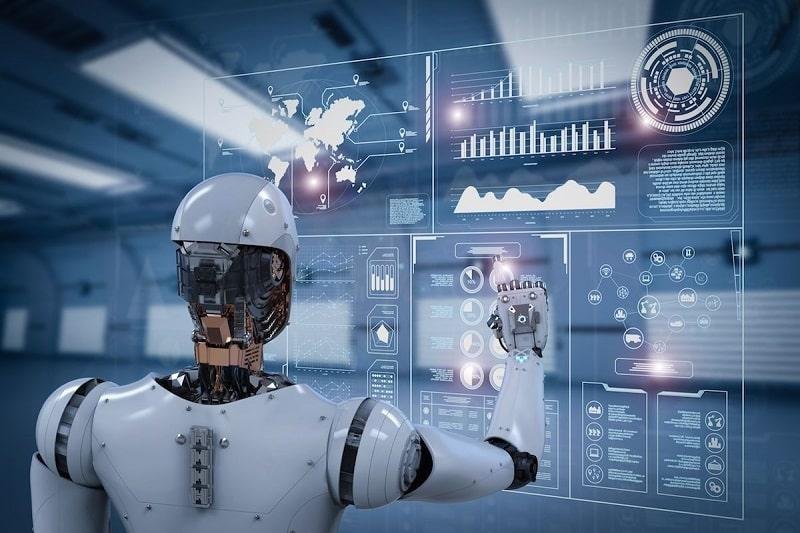
For decades, technology has changed the way people work.
The internet transformed communication. Cloud computing changed how businesses store and access information. Smartphones made work more mobile. Automation reduced the need for repetitive manual tasks.
But artificial intelligence is different.
AI is not simply another tool that helps people work faster. It is increasingly capable of analyzing information, writing content, generating software, interpreting data, communicating with customers, making recommendations, and completing tasks with limited human intervention.
That means the future of work will not simply be about humans working with better technology.
It will increasingly be about humans working alongside intelligent systems.
The question is no longer whether AI will change the workplace. It already is.
The more important question is:
What will work look like when intelligence itself becomes increasingly accessible through software?
AI Is Changing What a Job Means
Traditionally, a job has been defined by a collection of tasks.
An accountant analyzes financial information. A marketer creates campaigns. A customer-service representative answers questions. A developer writes code. A manager coordinates people and projects.
AI is beginning to perform portions of many of these responsibilities.
This does not necessarily mean that these professions will disappear. Instead, the structure of the work is likely to change.
A marketer may spend less time producing basic content and more time developing strategy.
A software developer may spend less time writing routine code and more time designing systems, reviewing AI-generated code, and solving complex problems.
A customer-service employee may spend less time answering repetitive questions and more time handling sensitive or complicated customer situations.
An analyst may spend less time collecting and organizing information and more time interpreting what the information means.
The shift is important.
AI is moving work away from task execution and toward judgment, supervision, creativity, strategy, and problem-solving.
The Rise of the AI-Augmented Worker
The most important worker of the future may not be the person who can compete with AI.
It may be the person who knows how to work effectively with it.
Imagine two employees performing the same job.
The first employee uses traditional methods. They manually research information, prepare reports, organize documents, analyze data, draft emails, and complete repetitive administrative work.
The second employee uses AI to accelerate research, summarize information, generate first drafts, analyze large amounts of data, automate repetitive processes, and organize workflows.
Both employees may have similar qualifications.
But their productivity can be dramatically different.
This creates a new form of professional advantage.
AI literacy is becoming a workplace skill.
Just as employees once had to learn how to use computers, email, spreadsheets, and the internet, workers increasingly need to understand how to use AI effectively.
The advantage will not necessarily belong to people who know the most about artificial intelligence.
It will belong to people who understand how to apply it to real problems.
Human Skills Will Become More Valuable
There is a common fear that AI will make human skills irrelevant.
The opposite may happen.
As machines become better at generating information, certain human abilities could become more valuable.
Critical thinking.
Leadership.
Creativity.
Communication.
Empathy.
Negotiation.
Decision-making.
Strategic thinking.
Relationship building.
These abilities are difficult to reduce to simple instructions.
Consider leadership.
An AI system can analyze performance data and identify patterns. It can recommend strategies and generate reports.
But leadership involves understanding people.
It involves building trust, navigating uncertainty, resolving conflict, communicating vision, and making difficult decisions when there is no perfect answer.
The future workplace will therefore need people who can combine technical intelligence with human intelligence.
The End of Routine Work?
One of the biggest changes AI could bring is the decline of repetitive knowledge work.
For years, automation primarily targeted physical and repetitive tasks.
AI is expanding automation into areas that were previously considered intellectual work.
Writing standard reports.
Processing documents.
Sorting information.
Generating summaries.
Answering common questions.
Creating basic designs.
Writing routine software.
Analyzing structured data.
Scheduling activities.
Preparing presentations.
These tasks may increasingly be performed by software.
That could be disruptive, but it could also create an enormous opportunity.
If technology removes low-value repetitive work, people can potentially spend more time on work that requires deeper thinking.
The challenge is making that transition successfully.
Jobs May Change Faster Than Education Systems
One of the biggest problems created by AI may not be unemployment itself.
It may be the growing gap between what people are trained to do and what businesses actually need.
Traditional education often prepares people for relatively stable professions.
But technology changes faster than educational institutions.
A skill that is valuable today may become less valuable tomorrow.
This means lifelong learning will become increasingly important.
People may need to continuously update their skills rather than relying on one degree or one professional qualification for an entire career.
The future worker may have to think of their career as an evolving system rather than a fixed destination.
Learn.
Apply.
Adapt.
Relearn.
Repeat.
AI Agents Could Change Business Operations
The next major stage of AI development may involve more than chatbots and assistants.
AI agents are increasingly being designed to perform sequences of tasks.
Instead of asking an AI system to write an email, for example, a business could eventually use an AI agent to monitor incoming requests, identify priorities, gather relevant information, draft responses, update internal systems, and escalate unusual cases to a human employee.
This creates the possibility of what might be called a digital workforce.
A company could have human employees supported by specialized AI systems responsible for research, customer support, administration, marketing, analysis, software development, and other functions.
The result could be smaller teams capable of accomplishing significantly more.
But this also creates new management challenges.
Businesses will need to decide which tasks should be automated, which decisions require human approval, and how AI systems should be monitored.
The manager of the future may not only manage people.
They may manage a combination of people, software, automation, and AI agents.
The Workplace Will Become More Flexible
AI could also accelerate the movement toward distributed and flexible work.
When intelligent software can coordinate projects, summarize meetings, document decisions, answer questions, automate workflows, and support employees across locations, physical proximity becomes less important for many types of work.
This does not mean offices will disappear.
Human collaboration remains valuable.
But the definition of a workplace may become broader.
A person could work from an office, home, coworking space, another city, or another country while remaining connected to the same digital infrastructure.
The important asset will increasingly be the system that connects people and information, not simply the physical building where employees sit.
Small Businesses May Gain Powerful Capabilities
AI could be particularly transformative for small businesses.
Historically, large companies have had an advantage because they could afford specialized departments.
A large organization could employ a marketing team, research team, legal department, customer-service team, financial analysts, designers, and software developers.
A small business could not always afford the same level of specialization.
AI can reduce some of that gap.
A small business owner can use intelligent tools to research markets, create marketing materials, analyze customer feedback, automate administrative processes, build software prototypes, support customers, and organize business information.
This does not eliminate the need for skilled professionals.
Instead, it gives individuals and small teams access to capabilities that previously required much larger organizations.
That could create a new generation of highly efficient businesses.
Creativity Will Not Disappear
Another concern is that AI will destroy creativity.
But creativity has never been simply about producing an output.
Creativity begins with ideas, observations, experiences, questions, and perspectives.
AI can generate thousands of possibilities.
Humans still need to decide which possibilities matter.
A filmmaker may use AI to explore visual concepts.
A writer may use it to research and brainstorm.
A designer may use it to explore different directions.
A developer may use it to prototype an application.
The creative advantage may therefore shift from production speed to creative direction.
The person with the strongest idea, clearest vision, and best judgment may become more valuable because AI can help turn that vision into reality faster.
New Jobs Will Emerge
Whenever technology changes the economy, some jobs decline while others emerge.
The AI economy will likely create new roles around the development, deployment, management, evaluation, governance, security, and integration of intelligent systems.
Organizations will need people who understand AI implementation.
They will need people who can evaluate AI outputs.
They will need people who understand AI security and governance.
They will need specialists who can connect AI systems to existing business processes.
They will need professionals who understand both technology and specific industries.
Some of these jobs do not yet have clearly established career paths.
That is one reason adaptability will become so important.
The Biggest Advantage May Be Adaptability
The future of work will reward people who can learn quickly.
Not necessarily those who already know everything.
Technology will continue to change.
New AI models will appear. New software will emerge. New business models will develop. Existing roles will evolve.
A person who refuses to adapt may find their skills becoming less valuable.
Someone who continually learns can move with the market.
This does not mean constantly chasing every new technology.
It means developing the ability to understand change, identify useful tools, and apply them intelligently.
The future belongs less to people who memorize tools and more to people who understand principles.
Businesses Must Redesign Work, Not Just Buy AI Tools
One of the biggest mistakes organizations can make is adopting AI without changing how work is structured.
Buying an AI tool does not automatically create productivity.
If a company adds AI to an inefficient process, it may simply make an inefficient process faster.
Businesses need to ask deeper questions.
Which tasks are repetitive?
Which decisions require human judgment?
Where are employees losing time?
Where does information become trapped?
Which processes can be automated?
Where should humans remain directly involved?
How should AI outputs be reviewed?
What data should AI systems be allowed to access?
These questions turn AI adoption from a technology project into a business transformation strategy.
The Human-AI Partnership
The most realistic future is probably not humans versus AI.
It is humans plus AI.
A doctor supported by intelligent diagnostic systems.
A teacher supported by adaptive learning tools.
A developer supported by AI coding systems.
A business owner supported by automated analytics.
A lawyer supported by intelligent research tools.
A designer supported by generative systems.
A manager supported by AI-powered decision tools.
The technology handles more of the information processing.
The human provides context, responsibility, judgment, values, and direction.
That partnership could become one of the defining characteristics of modern work.
What Workers Should Do Now
The AI-powered workplace is not a distant possibility.
Workers can begin preparing now.
First, learn how AI works at a practical level. You do not need to become an AI researcher. You need to understand what these systems can do, where they fail, and how they can be applied to your profession.
Second, learn to communicate with AI effectively. Clear instructions, context, constraints, and evaluation are becoming important skills.
Third, develop deeper expertise in your field. AI makes general information easier to access. Specialized knowledge and judgment can therefore become more valuable.
Fourth, strengthen human skills. Communication, leadership, creativity, critical thinking, and relationship-building will remain essential.
Finally, build an adaptability mindset. Do not define your career only by the tasks you perform today.
Define it by the problems you can learn to solve.
The Future Is Not About Becoming More Like Machines
The greatest opportunity presented by AI may not be making humans behave more like computers.
It may be allowing humans to spend less time doing what computers are good at.
Machines can process enormous amounts of information.
They can recognize patterns.
They can automate repetitive tasks.
They can generate possibilities at incredible speed.
Humans bring something different.
Purpose.
Values.
Experience.
Curiosity.
Judgment.
Imagination.
Meaning.
The future of work will be shaped by how effectively we combine these strengths.
AI will change the tools we use, the skills employers demand, the structure of organizations, and the way businesses operate.
But technology alone will not determine the outcome.
People and organizations will.
The winners in an AI-powered world will not necessarily be those who fear the technology the least or those who embrace every new tool blindly.
They will be those who learn how to work with intelligence rather than compete against it.
The future of work is not simply about machines doing more.
It is about humans being able to do more meaningful, valuable, and ambitious work because machines can handle more of the routine.
And that may be the most important transformation AI brings to the workplace.
Categories
- Make Money
- Product Review
- Social Media
- Excel
- Graphics design
- Freelancing/Consulting
- E-commerce and Digital Marketing
- Business
- Self Development
- Tips to Success
- Video Editing
- Photo Editing
- Website Promotion
- YouTube
- Computer
- Phone
- Music
- Spirituality & Faith
- School
- Tech & Digital
- Gaming
- News
- Digital Economy / Technology
- Relationship
- Real Estate
- Creative Arts & Design
- Medical
- Causes
- Networking
Read More
The global cosmetics and personal care industry continues to evolve as consumers increasingly seek scientifically formulated skincare products that deliver visible anti-aging and skin-rejuvenating benefits. Acetyl Tetrapeptide-2 has emerged as a highly valued cosmetic peptide due to its ability to support skin firmness, elasticity, and overall skin appearance. Widely...

For decades, governments planned employment around a familiar structure:schools produce graduates → industries absorb them → public and private sectors provide jobs. That structure is no longer holding. While many governments are still planning for yesterday’s jobs, technology is quietly creating entirely new forms of work—jobs that never appeared in any policy document,...
Most people believe opportunities are rare—something you stumble upon through luck, connections, or perfect timing. In reality, opportunity is everywhere. The difference between those who succeed and those who don’t is not access, intelligence, or resources—it’s perception. Some people walk through the same environment and see obstacles. Others see possibilities. This...
Life-changing opportunities rarely arrive with an announcement. Most of the time, they appear disguised as small decisions—an online course you almost ignored, a book you nearly stopped reading, a tutorial you considered too difficult, or a skill you assumed was meant for someone else. But what if the very skill capable of transforming your future is one you simply haven't learned yet?...

Online entertainment continues to evolve every year, and users now expect platforms that are fast, simple, secure, and enjoyable to use. In 2026, FLY88 has become a recognized online entertainment platform that focuses on providing a convenient and engaging experience for a wide range of users. From its modern interface to its responsive performance, the platform is designed to help...