


Solution Hub Groups Pages Market Events Blogs Funding Offers Jobs Courses Movies Games Merits
 Terms and Conditions
 Legal & Business Law Agreement
 Child Safety & Policy
 App Installation Guide
 User Guide Page
 Investors & Partnership agreement
 Flowisetech ambassador policy
 About Us
 Flowisetech Earning Guide
 Terms of Use
 Privacy Policy
 Help
Help
 FAQs
FAQs
 Community Guidelines
 Our Purpose
 Withdrawal Terms
 Verification Terms
 Community Policy
Every Great Application Started as a Simple Idea
Before there was a social network, there was an idea.
Before there was a marketplace, there was an idea.
Before there was a banking application, a learning platform, a delivery service, a productivity tool, or a global software company, there was something much smaller:
A thought in someone's mind.
Perhaps it was only a sentence.
“What if people could do this more easily?”
Or:
“There has to be a better way.”
Or:
“Why can't I build something that solves this problem?”
At that stage, there was no application.
No database.
No user interface.
No server.
No business model.
No thousands of users.
Just an idea.
And that is where almost every meaningful software product begins.
The difference between an idea and an application is not that the idea suddenly becomes brilliant.
It is that someone decides to build it.
Ideas Are Cheap. Execution Gives Them Value.
Having an idea is easy.
Millions of ideas are generated every day.
People think of applications they want to build while commuting, working, studying, talking with friends, or encountering problems.
But most ideas never become software.
Why?
Because the difficult part is not imagining the solution.
The difficult part is turning the imagination into something real.
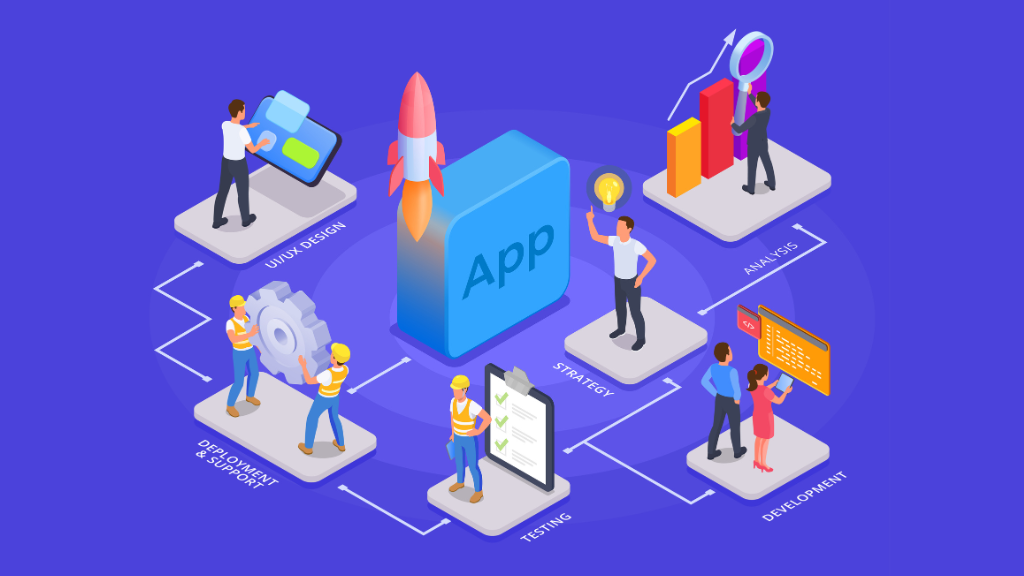
You have to define the problem.
Understand the users.
Design the experience.
Choose the technology.
Write the code.
Test the system.
Fix problems.
Deploy it.
Collect feedback.
Improve it.
Repeat.
An idea is the starting point.
Execution is the journey.
Don't Wait for a Perfect Idea
Many aspiring developers believe they need a revolutionary idea before they can build something meaningful.
They think:
“I need to create something nobody has ever seen.”
That is rarely necessary.
Many successful applications are based on familiar problems.
The opportunity often comes from asking:
Can this be made simpler?
Can this be made faster?
Can this be made cheaper?
Can this be made more accessible?
Can this experience be improved?
You don't necessarily need to invent a completely new category.
Sometimes you need to solve an existing problem better.
Start With a Problem, Not Technology
One of the easiest ways to build an unnecessary application is to begin with technology.
You discover a new framework and think:
“What can I build with this?”
That can be fun, but it can also lead to building something nobody needs.
A stronger starting point is:
“What problem exists?”
For example, imagine students struggling to organize their study materials.
The problem exists before the technology.
You can then ask:
-
What exactly are students struggling with?
-
How are they solving it today?
-
What makes the current solution frustrating?
-
What would a better solution look like?
-
What is the smallest version of that solution?
Only then should technology enter the conversation.
The technology serves the problem.
The problem should not exist merely to justify the technology.
The First Version Should Be Smaller Than Your Dream
One of the most dangerous stages of application development is the beginning.
You have an idea.
Then your imagination starts expanding.
You think of more features.
Then more.
Then more.
Soon your simple application has become:
-
user registration
-
social profiles
-
messaging
-
payments
-
subscriptions
-
notifications
-
analytics
-
artificial intelligence
-
recommendations
-
marketplace functionality
-
mobile apps
-
admin dashboards
-
affiliate systems
-
advanced reporting
Suddenly, you are trying to build a company before you have built the first feature.
This is where many projects die.
The solution is to create a minimum viable version.
Not the complete dream.
The smallest useful version.
Build the Smallest Useful Thing
Suppose your idea is an application that helps people find freelance work.
You don't need to begin by building an enormous global freelance marketplace.
You could start with:
Users can create profiles.
Clients can post jobs.
Freelancers can apply.
That's enough to create a basic interaction.
Later, you can add:
-
messaging
-
payments
-
reviews
-
notifications
-
search
-
categories
-
verification
-
subscriptions
-
analytics
The first version proves whether the basic idea works.
That is more valuable than spending two years building features nobody uses.
Your First Version Will Probably Be Wrong
This is something every developer should understand.
You can carefully plan an application and still discover that your assumptions were wrong.
You may think users want ten features.
They may only care about one.
You may think a particular workflow is convenient.
Users may find it confusing.
You may design a beautiful interface.
Users may struggle to understand what to click.
You may build an advanced feature.
Nobody may use it.
This is not necessarily failure.
It is information.
The real danger is spending enormous amounts of time protecting an assumption that has never been tested.
Users Are Part of the Development Process
A developer can build an application entirely from their own imagination.
But an application becomes valuable when it solves a real user's problem.
That means users should eventually become part of your learning process.
Watch what they do.
Listen to what they complain about.
Observe where they get confused.
Find out what they ignore.
Pay attention to what they repeatedly request.
Sometimes users will reveal problems you never considered.
That feedback can be more valuable than another hundred hours of theoretical planning.
The Difference Between a Feature and a Solution
Developers sometimes become obsessed with features.
They think:
“Our competitor has this feature. We need it too.”
But a feature is not automatically valuable.
Ask what the feature accomplishes.
Suppose your application has an advanced notification system.
What problem does it solve?
If users are receiving notifications they don't care about, the feature may actually make the product worse.
A better question is:
What outcome are we trying to create?
Features are tools.
Outcomes are the objective.
Great Applications Solve Specific Problems
The strongest applications usually have a clear reason to exist.
A user should be able to answer:
“Why should I use this?”
If the answer is complicated, the product may need more clarity.
Consider a simple statement:
“This application helps students organize their courses and assignments.”
That's understandable.
Now compare it with:
“This is an AI-powered collaborative productivity ecosystem featuring intelligent workflows, social interaction, gamification, and integrated communication.”
It sounds impressive.
But what does it actually do?
Complex products can be powerful.
But their value still needs to be understandable.
Complexity Should Be Earned
As an application grows, complexity naturally increases.
More users create more requirements.
More features create more dependencies.
More data creates more infrastructure needs.
More integrations create more failure points.
More traffic creates scalability challenges.
But complexity should be introduced because the product needs it—not because complexity makes the application appear advanced.
A simple solution that works is often better than a sophisticated solution that is difficult to maintain.
Start simple.
Add complexity when reality demands it.
The First Architecture Will Not Be Perfect
When developers start learning system design, they sometimes try to create the perfect architecture before writing the first feature.
They want to determine:
-
the perfect database structure
-
the perfect API architecture
-
the perfect folder structure
-
the perfect framework
-
the perfect hosting environment
-
the perfect deployment strategy
Planning matters.
But perfection is impossible at the beginning because you don't yet have enough information.
Your understanding of the application will change as you build it.
Your users will change your assumptions.
Your traffic will reveal new requirements.
Your experience will reveal better solutions.
Architecture should evolve with understanding.
Build, Measure, Learn
One of the most useful cycles in software development is:
Build → Measure → Learn.
Build something.
Put it in front of users.
Observe what happens.
Learn from the results.
Then improve it.
This cycle is powerful because it replaces assumptions with evidence.
You don't have to predict everything.
You can learn.
That is one of the greatest advantages of software.
A physical product may require enormous manufacturing changes.
Software can often be updated, tested, measured, and improved continuously.
Your Code Is Not the Product
This can be difficult for developers to understand.
You can spend months writing beautiful code.
You can create elegant classes.
You can optimize queries.
You can build sophisticated architecture.
But if the application does not solve a meaningful problem, the code itself does not create much value.
The user doesn't care how beautiful your internal architecture is.
They care whether the product helps them accomplish something.
Good engineering matters.
But engineering is ultimately in service of a product and its users.
Don't Confuse Difficulty With Value
A technically difficult application is not automatically valuable.
You could spend six months building an incredibly complex system that solves a problem nobody has.
Meanwhile, someone else might create a simple application that solves a common problem extremely well.
The second application can create far more value.
This is why developers should learn to ask:
Is this technically impressive?
and also:
Is this actually useful?
The second question is often more important.
The Best Ideas Often Come From Frustration
Some of the strongest application ideas begin with an annoying experience.
You try to accomplish something.
The process is slow.
Confusing.
Expensive.
Repetitive.
Unreliable.
You think:
“Why is this so difficult?”
That frustration can be valuable.
Instead of simply complaining, ask:
Could software solve this?
A problem you personally experience can give you an advantage because you already understand the pain.
You know what is frustrating.
You know what you wish existed.
You can begin designing from real experience rather than speculation.
Your First Users May Be People You Already Know
You don't always need thousands of users to validate an idea.
Your first users might be:
-
friends
-
colleagues
-
classmates
-
local businesses
-
professionals in your field
-
members of a community
-
people experiencing the problem you are solving
Their feedback can reveal whether your basic idea makes sense.
You can ask:
What was confusing?
What did you expect to happen?
What feature did you use most?
What did you ignore?
What would make you use this again?
These answers can shape the next version.
Development Is an Iterative Process
A great application is rarely created in one attempt.
It evolves.
Version 1 solves the basic problem.
Version 2 improves usability.
Version 3 fixes weaknesses.
Version 4 adds important capabilities.
Version 5 responds to user behavior.
Over time, the product becomes significantly better than the original idea.
This is why developers should not become emotionally attached to the first version.
The first version is not the destination.
It is evidence.
Every Bug Can Teach You Something
As an application grows, bugs are inevitable.
A bug can reveal:
-
an incorrect assumption
-
weak validation
-
poor architecture
-
an unexpected user behavior
-
a database problem
-
a performance bottleneck
-
a security weakness
Instead of seeing bugs only as problems, treat them as information.
Ask:
Why did this happen?
Then ask:
How can we prevent this class of problem in the future?
Fixing one bug is useful.
Understanding why an entire category of bugs occurs is much more valuable.
Great Applications Are Built by People Who Keep Going
Ideas are exciting at the beginning.
Execution is often boring.
You may spend days fixing a small bug.
You may rewrite a feature.
You may deal with deployment issues.
You may discover that your database structure needs to change.
You may receive negative feedback.
You may have to remove a feature you spent weeks building.
This is the less glamorous side of software development.
But persistence is one of the greatest advantages a developer can have.
Many projects do not fail because the idea was terrible.
They fail because the creator stopped before the idea had enough time to become useful.
Don't Compare Your Beginning to Someone Else's Product
When you start building an application, it is easy to compare your first version with established products.
You see a polished platform with millions of users.
You see a sophisticated interface.
You see advanced features.
You see a powerful infrastructure.
Then you look at your basic prototype and think:
“Mine is nowhere close.”
Of course it isn't.
You are comparing the beginning of your journey with the result of someone else's years of iteration.
Instead, ask:
Is my version better than it was last month?
That is a more useful comparison.
A Simple Idea Can Become a Serious Product
Consider how much can emerge from a basic concept.
Start with:
“People need an easier way to communicate.”
That could eventually become a messaging platform.
Start with:
“People need somewhere to sell things online.”
That could become a marketplace.
Start with:
“Students need help organizing their learning.”
That could become an educational platform.
Start with:
“Businesses need to manage their customers.”
That could become a customer relationship system.
The final product may look nothing like the original idea.
That's normal.
The idea provides direction.
The development process discovers the destination.
Your Idea Needs a First Version
At some point, thinking must become building.
Take the idea and write down:
Who is this for?
What problem does it solve?
What is the simplest useful version?
What is the one action users should be able to complete?
What information does the system need?
What should happen when something goes wrong?
Then start.
Create the project.
Create the first page.
Create the first database table.
Create the first API endpoint.
Create the first working interaction.
Don't worry about building the entire future at once.
Build the first piece of the future.
The Idea Is Only the Beginning
Your application may begin as a sentence.
Then it becomes a sketch.
Then a prototype.
Then a few lines of code.
Then a working feature.
Then a small application.
Then users arrive.
Then users provide feedback.
Then the application changes.
Then the architecture grows.
Then the business evolves.
Eventually, something that once existed only in your imagination becomes something other people depend on.
That transformation is one of the most fascinating things about software development.
You take something invisible—an idea—and gradually turn it into something people can use.
Build the Idea You Cannot Stop Thinking About
You do not need the perfect idea.
You need a problem worth exploring.
You do not need the perfect architecture.
You need a starting point.
You do not need thousands of users.
You need someone willing to use the first version.
You do not need to know everything.
You need to keep learning.
And you do not need to build everything today.
You need to build the next useful piece.
Every great application began much smaller than the product people eventually saw.
It began with someone asking a question.
Someone noticing a problem.
Someone imagining a better way.
Someone deciding to try.
So if you have an application idea sitting in your head, don't wait until it feels perfect.
Write it down.
Break it apart.
Build the smallest version.
Put it in front of someone.
Listen.
Improve.
Build again.
Because the application you imagine today may look impossible.
But every finished application once looked that way to someone.
The difference is that they started building.
Categories
- Make Money
- Product Review
- Social Media
- Excel
- Graphics design
- Freelancing/Consulting
- E-commerce and Digital Marketing
- Business
- Self Development
- Tips to Success
- Video Editing
- Photo Editing
- Website Promotion
- YouTube
- Computer
- Phone
- Music
- Spirituality & Faith
- School
- Tech & Digital
- Gaming
- News
- Digital Economy / Technology
- Relationship
- Real Estate
- Creative Arts & Design
- Medical
- Causes
- Networking
Read More
The social media landscape continues to evolve rapidly as users demand personalized, interactive, and seamless digital experiences. Businesses and startups are increasingly investing in custom social networking platforms to strengthen their digital presence and foster meaningful user interactions. Experienced Social Media App Developers play a crucial role in building scalable applications that...

In today’s world, being busy has become a badge of honor. We equate long hours, constant notifications, and packed schedules with progress. But the uncomfortable truth is this: busyness often hides stagnation. You can be exhausted and still be standing in the same place. Here’s why being busy doesn’t always mean you’re actually moving forward—and what to do...

Discipline has become one of the most underrated strengths of our time. In a world where notifications never stop, entertainment is always available, and attention is constantly being pulled in different directions, staying focused feels harder than ever. For young people especially, discipline is no longer just about self-control; it is about learning how to protect your time, energy, and...
Market Overview Fabry disease treatments focus on organ protection preventing progressive kidney, cardiac, and neurologic complications. Organ protection prevents disease complications through early intervention reducing disease burden and improving long-term outcomes. Current Market Landscape Enzyme replacement therapy preventing progressive organ damage. ACE inhibitors protecting kidneys....
Every sunrise is more than just the start of another day—it’s an invitation to renew your spirit, reset your mindset, and realign your purpose. How you begin your mornings has the power to shape not only your day but also the state of your soul. A well-crafted morning routine isn’t just about productivity—it’s a spiritual practice that can transform your life from...