



















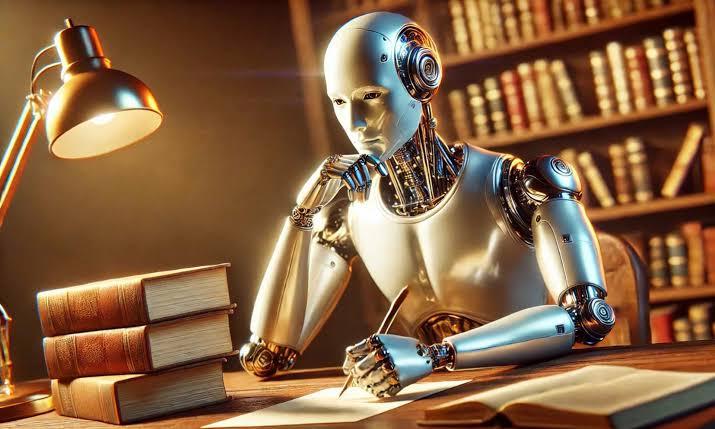
How Artificial Intelligence Is Transforming the Modern World

Artificial Intelligence (AI) is no longer a technology of the future. It is already shaping the world around us, changing how we work, communicate, learn, do business, and solve everyday problems. From smart assistants and automated customer services to advanced medical systems and self-driving technologies, AI is becoming an important part of modern life.
Over the past few years, artificial intelligence has developed rapidly, creating opportunities that were once difficult to imagine. Tasks that traditionally required hours of human effort can now be completed in minutes with the help of intelligent systems. This transformation is not only changing industries but also creating new possibilities for individuals, businesses, students, and entrepreneurs.
But how exactly is artificial intelligence transforming the modern world, and what does this mean for the future?
1. Transforming the Way We Work
One of the biggest impacts of artificial intelligence is its influence on the workplace. Businesses are increasingly adopting AI tools to automate repetitive tasks, manage information, improve customer experiences, and increase productivity.
For example, AI-powered systems can help businesses respond to customer enquiries, organize data, generate reports, and handle routine administrative responsibilities. This allows employees to spend more time on creative thinking, decision-making, and activities that require human understanding.
AI is also changing the skills employers look for. Digital literacy, problem-solving, creativity, and the ability to work with intelligent technologies are becoming increasingly valuable in many industries.
2. Making Education More Accessible and Personalized
Education is another area experiencing significant transformation through artificial intelligence.
Students can now use AI-powered learning platforms to understand difficult subjects, receive explanations, summarize study materials, practice new skills, and improve their research. Instead of relying entirely on traditional learning methods, learners can access additional support whenever they need it.
For teachers, AI can assist with preparing learning materials, developing assessments, and identifying areas where students may need additional attention.
However, AI should support education rather than replace genuine learning. Students still need to develop independent thinking, creativity, research skills, and the ability to evaluate information critically.
3. Improving Healthcare and Medical Services
Artificial intelligence is making important contributions to healthcare by helping medical professionals analyze information and make more informed decisions.
AI-powered technologies can assist in examining medical images, identifying patterns associated with certain diseases, monitoring patients, and supporting medical research.
These developments have the potential to improve the speed and accuracy of certain medical processes while helping healthcare professionals deliver better services.
Although AI cannot replace the experience, judgment, and compassion of qualified medical professionals, it can serve as a valuable tool in modern healthcare.
4. Creating New Business and Entrepreneurship Opportunities
Artificial intelligence is opening new opportunities for entrepreneurs and business owners.
Today, individuals can use AI tools to develop business ideas, create marketing content, design products, analyze customer behaviour, automate business processes, and improve customer support.
What makes this particularly interesting is that people with limited resources can now access tools that previously required larger teams or significant financial investment.
For startups and small businesses, AI can reduce operational pressure, improve efficiency, and make it easier to compete in an increasingly digital economy.
The ability to understand and apply AI effectively may become one of the most valuable advantages for future entrepreneurs.
5. Changing Communication and Everyday Life
Artificial intelligence is also influencing how people communicate and interact with technology.
Virtual assistants, translation tools, recommendation systems, smart devices, and AI-powered chatbots are making everyday activities more convenient.
For example, people can use AI to translate languages, find information, organize their schedules, receive personalized recommendations, and complete certain tasks through simple voice or text instructions.
Many of these technologies operate behind the scenes, meaning people often interact with AI without even realizing it.
As these systems continue to improve, technology will become more personalized, responsive, and integrated into everyday experiences.
6. Transforming Agriculture and Other Industries
Beyond offices, schools, and hospitals, artificial intelligence is also transforming industries such as agriculture, transportation, manufacturing, and logistics.
In agriculture, AI-powered systems can help farmers monitor crop conditions, identify potential plant diseases, predict weather patterns, and manage resources more effectively.
In manufacturing, intelligent machines can support production processes, detect equipment problems, and improve quality control.
In transportation, AI is helping improve traffic management, navigation, logistics, and the development of autonomous vehicles.
These applications demonstrate that artificial intelligence is not limited to the technology industry. Its influence extends across almost every sector of the modern economy.
7. The Challenges and Risks of Artificial Intelligence
Despite its many benefits, artificial intelligence also presents challenges that society must take seriously.
One major concern is job displacement. As businesses automate certain tasks, some traditional roles may change or become less necessary. This makes continuous learning and skills development increasingly important.
Other concerns include data privacy, cybersecurity, misinformation, algorithmic bias, and the misuse of AI-generated content.
There is also the risk of becoming overly dependent on AI tools. When people rely on technology without developing their own understanding and judgment, important human skills can gradually weaken.
For these reasons, artificial intelligence must be developed and used responsibly. Innovation should go hand in hand with ethical standards, proper regulation, transparency, and human oversight.
8. Why Young People Should Start Learning About AI Today
For students, young professionals, entrepreneurs, and anyone interested in technology, artificial intelligence represents an opportunity worth exploring.
You do not necessarily need to become a software engineer or AI researcher to benefit from this technology. Understanding how to use AI tools, solve problems with them, and apply them in practical situations can already provide a valuable advantage.
Young people can begin by exploring AI-powered applications, learning basic digital skills, experimenting with automation, understanding how AI works, and identifying problems that technology can help solve.
The important thing is to remain curious and willing to learn. Technology will continue to evolve, and those who adapt will be better prepared to take advantage of emerging opportunities.
The Future Belongs to Those Who Adapt
Artificial intelligence is changing the modern world in ways that will continue to influence generations to come. It is transforming businesses, improving access to information, supporting education, advancing healthcare, and creating opportunities across different industries.
However, the future of AI will not be determined by technology alone. It will also depend on how people choose to develop, manage, and use these powerful tools.
Rather than seeing artificial intelligence only as a threat, we should recognize its potential as a tool for learning, creativity, innovation, and economic growth.
The most important step is to start understanding it today.
The future is not simply about what artificial intelligence can do. It is about what people can achieve when they learn to use it wisely.
Stay curious, keep learning, and embrace the opportunities technology creates. The future is being built today, and you can be part of it.