


, Check Verification Solution Hub Groups Pages Market Events Blogs Funding Offers Jobs Courses Movies Games Merits
 Terms and Conditions
 Legal & Business Law Agreement
 Child Safety & Policy
 App Installation Guide
 User Guide Page
 Investors & Partnership agreement
 About Us
 Flowisetech Earning Guide
 Terms of Use
 Privacy Policy
 Help
Help
 FAQs
FAQs
 Community Guidelines
 Our Purpose
 Withdrawal Terms
 Verification Terms
 Community Policy
UX Design in the Age of AI: Designing for Humans + Machines
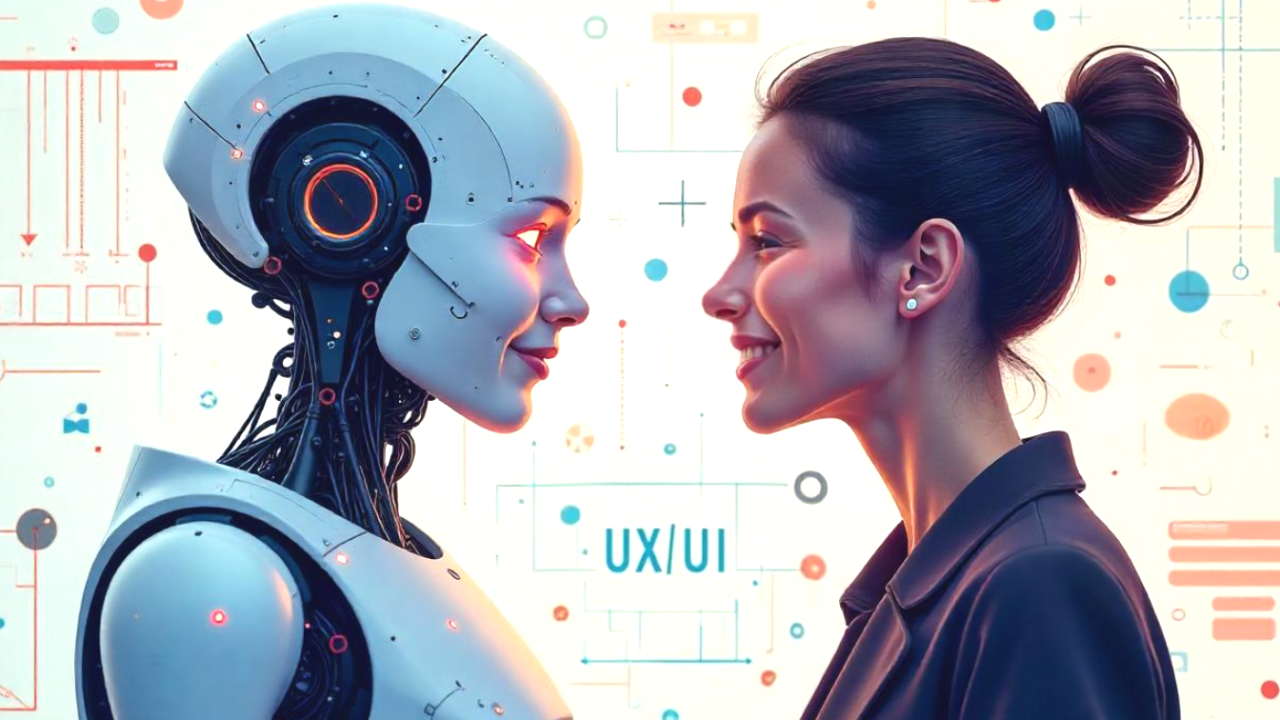
Artificial Intelligence is no longer a futuristic concept—it is embedded in everyday digital experiences. From personalized content feeds and voice assistants to predictive search and automated decision-making, AI now plays an active role in how users interact with products. This shift fundamentally changes the role of UX design.
Today, UX designers are no longer designing only for humans. They are designing for humans interacting with intelligent systems. This new reality demands a deeper understanding of how people think, how machines behave, and how the two can work together seamlessly.
Welcome to UX design in the age of AI.
The Shift: From Static Interfaces to Intelligent Experiences
Traditional UX focused on predictable, rule-based systems. Designers could map user journeys with clear inputs and outputs. AI-driven systems, however, introduce probability, learning, and adaptation.
Instead of:
-
“If the user clicks X, show Y”
We now design for:
-
“If the system predicts the user’s intent, suggest Y—unless the user disagrees.”
This means UX is no longer just about screens and flows. It’s about relationships between users and systems that think, learn, and evolve over time.
Designing for Trust in AI-Powered Experiences
Trust is the foundation of any successful AI-driven product. When users don’t understand or trust an AI system, they resist it—even if it’s accurate.
Key Trust Principles in AI UX
1. Transparency over mystery
Users don’t need to know the algorithm—but they need to know why something happened.
-
Why was this recommendation shown?
-
Why was this decision made?
2. Explainability builds confidence
Simple explanations such as:
-
“Recommended because you watched…”
-
“This result matches your previous searches…”
These small details dramatically improve user confidence.
3. Control reduces fear
AI should assist, not dominate.
-
Let users override decisions
-
Offer settings to customize AI behavior
-
Provide opt-outs when possible
A user who feels in control is far more likely to trust AI.
Human-Centered AI: Designing With Empathy
AI systems may be intelligent, but users are emotional, biased, impatient, and inconsistent. UX design must act as the bridge between machine logic and human behavior.
Core Human-Centered Design Questions
-
How does this AI make users feel?
-
Does it reduce effort—or create anxiety?
-
Does it empower users—or make them feel replaced?
Great AI UX design amplifies human capability rather than attempting to replace it.
For example:
-
AI writing tools should assist creativity, not remove the user’s voice
-
AI financial tools should support decisions, not force them
Designing for Uncertainty and Errors
AI is probabilistic by nature—it can be wrong. UX design must account for this.
Best Practices for AI Error Handling
1. Graceful failure
When AI fails, the interface should:
-
Acknowledge uncertainty
-
Provide alternatives
-
Avoid blaming the user
Example:
“I might be wrong—would you like to refine this?”
2. Feedback loops
Let users correct the AI.
-
“Was this helpful?”
-
“Improve future results”
This improves the system and makes users feel heard.
3. Avoid overconfidence in tone
An AI that sounds too certain when wrong damages trust faster than a cautious one.
UX Patterns Unique to AI Products
AI introduces entirely new design patterns that didn’t exist in traditional UX.
1. Progressive Disclosure
Reveal AI capabilities gradually instead of overwhelming users upfront.
2. AI Confidence Indicators
Show how confident the system is:
-
“High confidence”
-
“Still learning”
-
“Experimental”
3. Mixed-Initiative Interfaces
Both the user and the AI can take initiative.
-
AI suggests
-
User confirms or modifies
This collaborative interaction feels natural and respectful.
Ethical UX Design in AI Systems
Ethics is no longer optional in UX—it’s a core responsibility.
Key Ethical UX Considerations
Bias awareness
AI reflects the data it’s trained on. UX designers must:
-
Identify potential bias
-
Design safeguards
-
Offer inclusive experiences
Privacy by design
AI often requires large amounts of data. UX should:
-
Clearly explain data usage
-
Avoid dark patterns
-
Respect user consent
Avoid deceptive intelligence
Never make AI appear more human or capable than it truly is. Over-anthropomorphizing leads to false expectations.
The Role of the UX Designer Is Expanding
In the age of AI, UX designers are no longer just interface designers. They are:
-
System thinkers
-
Ethical advocates
-
Behavioral designers
-
Collaborators with data scientists and engineers
Designers must understand:
-
How models learn
-
What data is used
-
Where AI limitations exist
You don’t need to build the model—but you must design the experience around it responsibly.
UX Metrics Are Evolving Too
Traditional metrics like clicks and task completion are no longer enough.
AI UX success is measured by:
-
User trust over time
-
Adoption and reliance
-
Frequency of overrides
-
Quality of feedback loops
-
Long-term satisfaction, not just speed
Good AI UX is less about efficiency alone—and more about confidence and comfort.
Designing the Future: Humans + Machines, Not Humans vs Machines
The future of UX design is not about choosing between humans and machines—it’s about designing collaboration.
The best AI-powered experiences will:
-
Feel intuitive, not intimidating
-
Be transparent, not mysterious
-
Support humans, not replace them
-
Learn with users, not at them
In this new era, UX design becomes the discipline that ensures technology remains humane—even as it becomes more intelligent.
Final Thought
AI may be transforming interfaces, but human experience remains the core of UX design.
Designing in the age of AI means embracing complexity, uncertainty, and responsibility—while never losing sight of the people we design for.
Because in the end, the most powerful systems are not the smartest ones—but the ones that understand humans best.
Categories
- Make Money
- Product Review
- Social Media
- Excel
- Graphics design
- Freelancing/Consulting
- E-commerce and Digital Marketing
- Business
- Self Development
- Tips to Success
- Video Editing
- Photo Editing
- Website Promotion
- YouTube
- Computer
- Phone
- Music
- Spirituality & Faith
- School
- Tech & Digital
- Gaming
- News
- Digital Economy / Technology
- Relationship
- Creative Arts & Design
- Medical
- Causes
- Networking
Read More
For many students in Nigeria, making money while studying feels almost impossible. School schedules are tight, jobs are scarce, and capital is limited. I used to think the same—until I discovered that earning ₦100,000 monthly as a student is possible, without quitting school or doing anything illegal. In this post, I’ll break down exactly how I do it, step by step, and how you can...
Setting up a Monthly Financial Reporting Checklist is crucial for entrepreneurs who want to stay in control of their business finances, track performance, and make informed decisions. Here's a comprehensive guide with elaborated steps, key points, and why each item matters. As an entrepreneur, your financial reports help you: Evaluate your business performance. Identify trends...
1 Understand the Hybrid App Concept A hybrid app is: Written in HTML, CSS, JavaScript (like a website). Runs inside a native container (Cordova/Capacitor) so it can access device APIs. Deployable to Android, iOS, and the web with the same codebase. 2 Install the Required Tools Prerequisites: Node.js (https://nodejs.org) → Comes with npm (Node Package Manager)....

Creating a table in HTML involves using the <table> element along with other related elements like <tr> for table rows, <th> for table headers, and <td> for table data cells. Here's an example of how to create a simple table: Basic Structure <!DOCTYPE html> <html lang="en"> <head> <meta charset="UTF-8"> <meta name="viewport"...

Becoming a better version of yourself without relying on anyone else is absolutely possible. It demands self-discipline, introspection, and consistent action. Here’s a careful and detailed breakdown with key points and examples to guide you on this solo journey of personal transformation: 1. Clarity: Define Who You Want to Become Key Point: You must clearly identify what "better"...