


Solution Hub Groups Pages Market Events Blogs Funding Offers Jobs Courses Movies Games Merits
 Terms and Conditions
 Legal & Business Law Agreement
 Child Safety & Policy
 App Installation Guide
 User Guide Page
 Investors & Partnership agreement
 Flowisetech ambassador policy
 About Us
 Flowisetech Earning Guide
 Terms of Use
 Privacy Policy
 Help
Help
 FAQs
FAQs
 Community Guidelines
 Our Purpose
 Withdrawal Terms
 Verification Terms
 Community Policy
What Should You Learn Next? A Practical Framework for Choosing the Right Skills at the Right Time
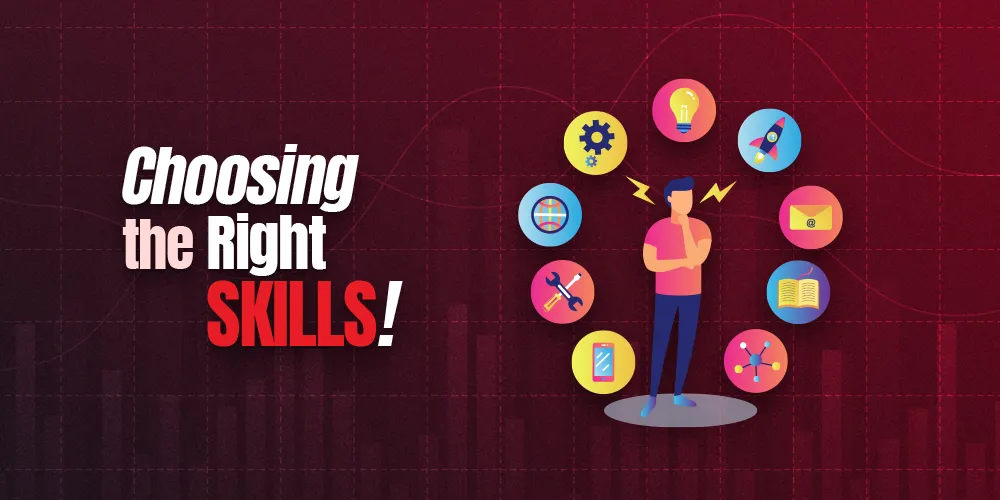
In a world overflowing with information, opportunities, and constant change, one question quietly shapes the direction of your life more than most: What should I learn next?
It seems simple on the surface, yet the answer is rarely obvious. Many people fall into the trap of learning randomly—chasing trends, copying others, or reacting to pressure—only to find themselves busy but not progressing. The issue is not a lack of effort; it is a lack of structure.
Learning, when approached strategically, becomes a powerful tool for shaping outcomes. When approached without direction, it becomes noise.
This is where a practical framework becomes essential.
The Problem with Unstructured Learning
Most learning decisions are reactive rather than intentional. A new skill becomes popular, and suddenly everyone wants to learn it. A friend succeeds in a field, and it feels like the right path to follow. A course appears online, and it seems like an opportunity that should not be missed.
But without context, even good skills can be poorly timed.
Learning something too early can lead to confusion and wasted effort. Learning something too late can result in missed opportunities. Learning the wrong thing altogether can create a cycle of frustration and stagnation.
The real challenge is not access to knowledge—it is knowing what matters now.
A Practical Framework for Choosing the Right Skill
To move from random learning to intentional growth, decisions must be guided by three core factors: direction, stage, and opportunity.
1. Start with Direction: What Are You Moving Toward?
Before choosing any skill, you need clarity on where you are heading. Not a perfect life plan, but a defined direction.
Are you trying to:
-
Build financial stability?
-
Start or grow a business?
-
Become employable in a specific field?
-
Increase your independence or flexibility?
Without direction, every skill looks useful—and that is the problem. When everything seems important, nothing is prioritized correctly.
A person aiming to start a business does not need the same skills as someone preparing for a corporate career. A student does not need the same focus as someone already earning but trying to scale income.
Direction filters relevance.
2. Consider Your Stage: Where Are You Right Now?
The same skill can have completely different value depending on timing.
Your current stage determines what is practical, not just what is interesting.
For example:
-
At an early stage, foundational skills such as communication, digital literacy, and basic financial understanding create leverage.
-
At a growth stage, specialized or income-generating skills become more important.
-
At an advanced stage, system-building, delegation, and strategic thinking begin to matter more than doing everything yourself.
A common mistake is trying to learn advanced strategies without mastering fundamentals. This creates the illusion of progress without real results.
The right skill at the wrong stage slows you down.
3. Evaluate Opportunity: What Can You Actually Use Now?
Not every valuable skill is immediately useful. Some skills are powerful but require the right environment to apply them.
Ask a simple but critical question: Where will I use this?
If there is no clear answer, the skill may not be urgent.
For instance:
-
Learning a high-income digital skill is useful—but only if you have access to clients, platforms, or a market.
-
Studying business strategy is valuable—but only if you are actively building or planning to build something.
Opportunity turns knowledge into results.
Without application, learning becomes theoretical. With application, it becomes transformational.
4. Align the Three: The Decision Point
The right skill sits at the intersection of:
-
What you are trying to achieve (direction)
-
Where you currently stand (stage)
-
What you can apply immediately (opportunity)
When these three align, learning becomes efficient and purposeful.
Instead of asking, “Is this a good skill?”, the better question becomes:
“Is this the right skill for me, right now?”
5. Focus Over Volume: Depth Creates Results
Another hidden problem in modern learning is overconsumption. People start multiple courses, explore different fields, and gather information without ever going deep enough to see results.
Skill development is not about how much you learn—it is about how well you can use what you learn.
Focusing on one relevant skill and developing competence creates momentum. That momentum builds confidence, and that confidence opens new opportunities.
Depth compounds. Distraction resets progress.
6. Build a Learning Cycle, Not a One-Time Decision
Choosing what to learn is not a one-time event. It is a continuous cycle:
-
Choose a relevant skill
-
Learn with intention
-
Apply in real situations
-
Evaluate results
-
Adjust and move to the next skill
This cycle ensures that learning remains connected to outcomes, not just information.
Over time, this creates a structured path of growth rather than scattered effort.
7. The Long-Term Advantage
When you consistently choose the right skills at the right time, something powerful begins to happen.
You stop feeling behind.
You stop chasing everything.
You begin to see clear progress—not just in knowledge, but in results, confidence, and direction.
Your decisions become sharper. Your time becomes more valuable. Your efforts begin to compound.
Final Thought
The question is not whether learning is important—it always is.
The real question is whether your learning is aligned.
Because in the end, success is not built on how much you know, but on how well your knowledge is chosen, applied, and timed.
Choose carefully. Learn intentionally. And let each skill move you forward with purpose.

Categories
- Make Money
- Product Review
- Social Media
- Excel
- Graphics design
- Freelancing/Consulting
- E-commerce and Digital Marketing
- Business
- Self Development
- Tips to Success
- Video Editing
- Photo Editing
- Website Promotion
- YouTube
- Computer
- Phone
- Music
- Spirituality & Faith
- School
- Tech & Digital
- Gaming
- News
- Digital Economy / Technology
- Relationship
- Real Estate
- Creative Arts & Design
- Medical
- Causes
- Networking
Read More
Finding clothing that combines premium quality with timeless style is becoming increasingly important for modern shoppers. Instead of buying pieces that lose their appeal after one season, today's fashion enthusiasts are investing in wardrobe essentials that remain stylish year after year. That's exactly what Parke delivers. Designed for people who appreciate clean aesthetics and lasting...

A tech stack refers to the combination of technologies, programming languages, frameworks, tools, and software used to develop and run an application or system. It includes both front-end and back-end components, as well as infrastructure and third-party services that support development, deployment, and maintenance. Breaking Down a Tech Stack A typical tech stack is divided into several...

In a world overflowing with information, opportunities, and constant change, one question quietly shapes the direction of your life more than most: What should I learn next? It seems simple on the surface, yet the answer is rarely obvious. Many people fall into the trap of learning randomly—chasing trends, copying others, or reacting to pressure—only to find themselves busy...
Java is a versatile, high-level programming language widely used for various purposes, including: 1. Web Development Java is used to build dynamic websites and web applications. Frameworks like Spring and Hibernate make it ideal for developing scalable, secure, and robust web applications. 2. Mobile Development Java is the backbone for Android app development. Android Studio...

The online entertainment world is growing quickly, and players are always looking for platforms that provide convenience, variety, and a smooth user experience. LLWIN is designed as an all-in-one online entertainment platform that brings multiple gaming options together in one easy-to-use system. With a modern design, simple navigation, and support for different devices, LLWIN đăng ký...