

Solution Hub Groups Pages Market Events Blogs Funding Offers Jobs Courses Movies Games Merits
 Terms and Conditions
 Legal & Business Law Agreement
 Child Safety & Policy
 App Installation Guide
 User Guide Page
 Investors & Partnership agreement
 Flowisetech ambassador policy
 About Us
 Flowisetech Earning Guide
 Terms of Use
 Privacy Policy
 Help
Help
 FAQs
FAQs
 Community Guidelines
 Our Purpose
 Withdrawal Terms
 Verification Terms
 Community Policy
Why Small Daily Improvements Create Extraordinary Careers

Extraordinary careers rarely begin with extraordinary moments. They begin quietly. Almost invisibly. A decision to improve something small today, repeated again tomorrow, and continued long enough that it eventually becomes undeniable.
Most people underestimate this process because it doesn’t feel powerful while it is happening. But careers are not shaped by intensity. They are shaped by accumulation.
Small Progress Looks Insignificant at First
A single day of improvement changes almost nothing. One better line of code. One clearer explanation. One extra hour of focused learning. One improved design decision.
Individually, these actions are too small to be impressive. That is why they are often ignored.
But what makes them powerful is not their size—it is their persistence.
Over time, these small actions begin to stack. They don’t just add up. They multiply your ability to understand, create, and execute. This is the same principle behind compound growth in systems like compound interest in Compound interest, where small gains reinvested consistently eventually produce exponential results.
Careers Are Built on Compounding Ability
Skill does not develop in straight lines. It develops in layers.
When you improve slightly every day, you are not just adding knowledge—you are strengthening your foundation. Each new improvement becomes the base for the next one.
At the beginning, progress feels slow. But after enough repetition, something shifts. You stop learning from zero each time. You start learning from a higher starting point.
That is where acceleration begins.
Why Small Improvements Beat Big Efforts
Big efforts feel satisfying. They create emotional momentum. A weekend of intense learning or a sudden burst of motivation can make you feel like you are transforming.
But careers are not built in bursts.
Big efforts are often unsustainable because they depend on motivation. Small improvements are different. They depend on structure.
Instead of trying to change everything at once, you adjust one small behavior:
-
Write slightly cleaner code
-
Understand one more concept
-
Improve one small communication habit
-
Refine one design decision
These changes are not dramatic, but they are repeatable. And repeatability is what builds careers.
The Invisible Phase of Growth
One of the most misunderstood parts of improvement is the delay between effort and visible results.
In the early stages, nothing looks different externally. Your output may not stand out. Your progress may not feel meaningful. This creates doubt, and many people stop here.
But internally, something important is happening.
You are building patterns of thinking. You are reducing friction in your decisions. You are increasing your baseline level of performance.
This phase is invisible—but it is the foundation of everything that comes later.
Identity Changes Before Results Do
Small improvements don’t just change skills. They change identity.
A person who consistently writes code begins to think like a developer. A person who consistently writes begins to think like a writer. A person who consistently solves problems begins to think like an engineer.
This shift is subtle but powerful. It changes how you approach opportunities, how you respond to challenges, and how seriously you take your own work.
Before your career changes externally, your identity changes internally.
Why Most People Stop Too Early
The biggest obstacle is not difficulty. It is impatience.
People expect visible results before the system has had time to work. When they don’t see immediate change, they assume nothing is happening.
But early progress is mostly structural, not visible. It is like building the foundation of a building and expecting it to look impressive before anything is constructed on top of it.
Many people quit right before their progress becomes visible.
The Real Advantage Is Consistency Over Time
In the long run, careers are not defined by talent alone. They are defined by direction and consistency.
Two people can start at the same level. One improves slightly every day. The other improves occasionally in large bursts.
After a year, the difference is no longer small. It is fundamental.
One person has built momentum. The other keeps restarting.
Final Thought
Small daily improvements work because they remove the pressure of transformation and replace it with the reality of progression.
You don’t need to change everything at once. You only need to improve slightly, consistently, in the right direction.
Over time, those small improvements stop being small. They become the reason your career looks extraordinary from the outside—even though it was built quietly from the inside.
Categories
- Make Money
- Product Review
- Social Media
- Excel
- Graphics design
- Freelancing/Consulting
- E-commerce and Digital Marketing
- Business
- Self Development
- Tips to Success
- Video Editing
- Photo Editing
- Website Promotion
- YouTube
- Computer
- Phone
- Music
- Spirituality & Faith
- School
- Tech & Digital
- Gaming
- News
- Digital Economy / Technology
- Relationship
- Real Estate
- Creative Arts & Design
- Medical
- Causes
- Networking
Read More
In today's competitive confectionery industry, choosing the right candy machine factory can determine the efficiency, product quality, and long-term success of your production line. Modern candy production has grown beyond simple craftsmanship. Companies now seek automated, consistent, and scalable solutions that can deliver high-volume output without compromising on taste or aesthetics. From...

HTML is the foundation of every website. Whether you’re building a simple landing page, a personal portfolio, or a complex web application, writing clean and semantic HTML is essential for performance, accessibility, SEO, and maintainability. Many developers jump straight into CSS and JavaScript, but poorly structured HTML can negatively impact search engine rankings, user...

Navigating the World of Technology with Confidence Technology is one of the fastest-growing industries in the world, offering countless opportunities for learning, career advancement, entrepreneurship, and innovation. However, for many beginners, the abundance of options can feel overwhelming. Should you learn software development, cybersecurity, data analysis, cloud computing, artificial...

Digital marketing refers to the use of the internet, mobile devices, social media, search engines, and other digital platforms to promote products, services, or brands. It has become an essential part of modern business strategies as more people turn to digital channels for information, entertainment, shopping, and social interaction. Here’s an overview of key concepts in digital...

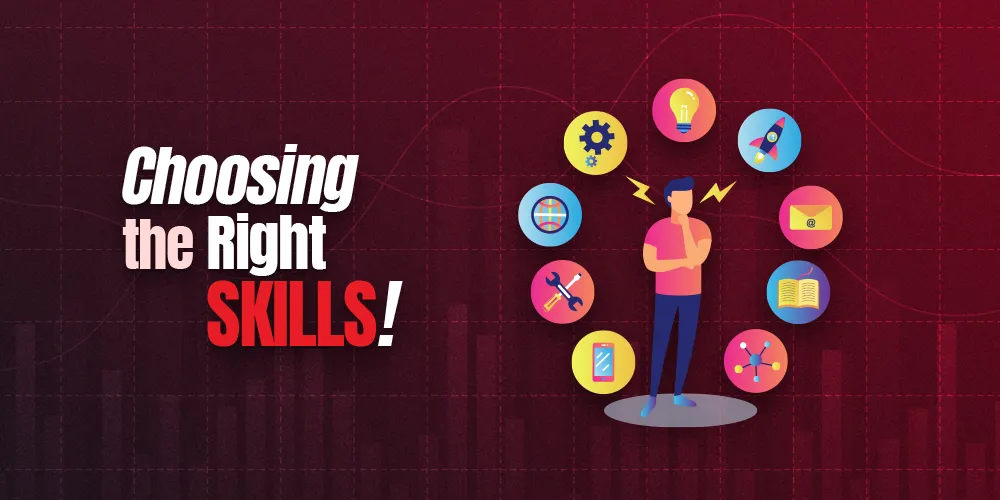
In a world overflowing with information, opportunities, and constant change, one question quietly shapes the direction of your life more than most: What should I learn next? It seems simple on the surface, yet the answer is rarely obvious. Many people fall into the trap of learning randomly—chasing trends, copying others, or reacting to pressure—only to find themselves busy...