
Solution Hub Groups Pages Market Events Blogs Funding Offers Jobs Courses Movies Games Merits

MCP Server: The Complete Guide to AI Integration, APIs, and Enterprise Data
Artificial intelligence is rapidly transforming how businesses work, but an AI model is only as useful as the data it can access. Most organizations store valuable information in SQL databases, enterprise applications, file systems, and APIs. Without a standardized way to connect AI with these resources, developers must build custom integrations for every application.
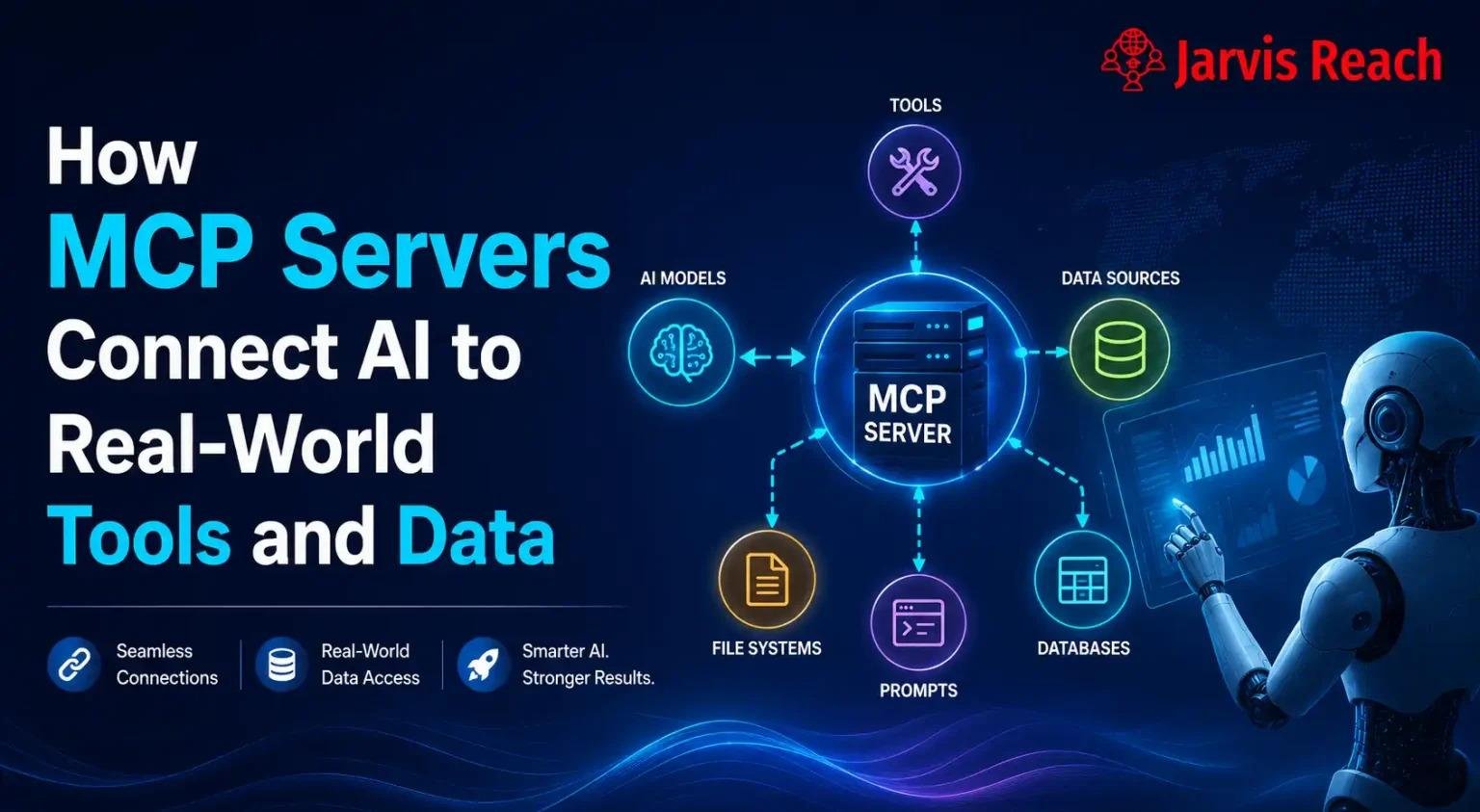
This is where an MCP Server becomes essential. The Model Context Protocol (MCP) provides a standardized client-server architecture that allows AI applications to securely communicate with external tools, databases, prompts, and business systems. It helps developers build AI applications that can access live information instead of relying only on pre-trained knowledge.
In this guide, you'll learn how an MCP Server works, why an MCP Client is important, and how MCP simplifies secure AI integration across enterprise environments.
What Is an MCP Server?
An MCP Server is a server that implements the Model Context Protocol, exposing resources, tools, and prompt templates to AI applications through a standardized interface.
Instead of creating separate integrations for every AI platform, developers can build one MCP Server that multiple compatible AI applications can use. MCP relies on a client-server architecture with standardized communication based on JSON-RPC.
An MCP Server can provide access to:
- APIs
- Enterprise data
- SQL databases
- File systems
- Business applications
- Cloud services
- Internal documentation
How MCP Server Works
The Model Context Protocol consists of three primary components.
MCP Client
An MCP Client connects an AI platform to one or more MCP Servers.
Its responsibilities include:
- Discovering available tools
- Sending requests
- Receiving responses
- Managing authentication
- Accessing enterprise resources
- Maintaining communication
The client allows an AI platform to interact with external systems without requiring custom integrations for each one.
MCP Server
The MCP Server exposes business capabilities including:
- Tools
- Resources
- Prompt templates
It also handles permissions, authorization, and communication between AI applications and connected systems.
External Resources
The server can connect AI applications with multiple external resources such as:
- APIs
- Enterprise software
- SQL databases
- File systems
- Knowledge bases
- Cloud storage
- Internal applications
This enables AI assistants to retrieve accurate and current information whenever needed.
API Integration
Every modern organization depends on APIs.
An MCP Server makes API integration much simpler by exposing APIs through a standardized interface.
AI applications can use APIs for:
- Customer information
- CRM updates
- Inventory management
- Payment processing
- Business automation
- Analytics
Instead of writing different connectors for every AI model, developers build one MCP-compatible integration.
Enterprise Data Access
Most organizations store important business information across multiple systems.
Using an MCP Server, AI assistants can securely access enterprise data from:
- HR systems
- ERP software
- CRM platforms
- Finance applications
- Internal documentation
- Customer databases
This allows AI to answer questions using live organizational data rather than outdated training information.
SQL Databases
Business information often resides inside SQL databases.
An MCP Server can securely connect AI applications with databases such as:
- MySQL
- PostgreSQL
- Microsoft SQL Server
- Oracle Database
- SQLite
This allows AI to:
- Generate reports
- Retrieve customer records
- Analyze business data
- Answer database queries
- Support decision-making
Managing Multiple Data Sources
Organizations rarely keep all information in one location.
An MCP Server combines multiple data sources, including:
- APIs
- SQL databases
- Cloud storage
- File systems
- Business software
- Internal services
Combining these sources gives AI assistants a complete view of business information.
Prompt Templates
Prompt templates standardize how AI applications perform recurring tasks.
Benefits include:
- Consistent responses
- Easier workflow automation
- Better quality control
- Reduced manual effort
- Faster implementation
Many organizations use prompt templates for customer support, documentation, and internal knowledge management.
Authentication
Security is critical whenever AI interacts with enterprise systems.
MCP supports secure authentication methods such as:
- OAuth
- API Keys
- Access Tokens
- Role-Based Access Control (RBAC)
- HTTP Authorization
These mechanisms ensure AI applications access only approved resources.
Stateful vs Stateless Communication
MCP supports different communication models depending on business requirements.
Stateless Communication
A stateless request is processed independently.
Advantages include:
- Easy scalability
- Faster performance
- Lower resource usage
- Simpler architecture
Stateless communication is commonly used for simple API requests.
Stateful Communication
A stateful system maintains previous interactions.
Benefits include:
- Conversation history
- Personalized responses
- Multi-step workflows
- Context-aware AI
Enterprise AI assistants often rely on stateful communication for better user experiences.
Working with File Systems
Many businesses store valuable information inside file systems.
An MCP Server can connect AI applications with:
- PDF documents
- Word files
- Excel spreadsheets
- CSV files
- Shared folders
- Internal documentation
This enables AI to search, summarize, and retrieve information from organizational files.
Backend Integration
An MCP Server supports multiple backends, including:
- REST APIs
- GraphQL APIs
- SQL databases
- Cloud services
- Internal applications
- Enterprise software
- Microservices
Organizations can integrate AI without replacing their existing infrastructure.
Benefits of MCP Server
Using an MCP Server provides numerous advantages.
Standardized Integration
One protocol connects AI applications with multiple systems.
Secure Communication
Authentication and authorization protect enterprise resources.
Real-Time Information
AI retrieves current data instead of relying only on pre-trained knowledge.
Improved Productivity
Employees spend less time searching for information.
Enterprise Scalability
Organizations can add new tools without rebuilding AI integrations.
Common Enterprise Use Cases
Businesses use MCP Server for:
- AI customer support
- Internal knowledge assistants
- IT service desks
- HR automation
- Financial reporting
- Sales support
- Workflow automation
- Software development
- Enterprise search
- Business analytics
These applications help organizations improve efficiency while reducing manual work.
Conclusion
An MCP Server provides a secure, standardized, and scalable way to connect AI applications with APIs, enterprise data, SQL databases, data sources, file systems, and business backends. Combined with an MCP Client, secure authentication, reusable prompt templates, and support for both stateful and stateless communication, the Model Context Protocol simplifies enterprise AI integration and enables organizations to build powerful, real-time AI solutions that grow with their business.
Categories
- Make Money
- Product Review
- Social Media
- Excel
- Graphics design
- Freelancing/Consulting
- E-commerce and Digital Marketing
- Business
- Self Development
- Tips to Success
- Video Editing
- Photo Editing
- Website Promotion
- YouTube
- Computer
- Phone
- Music
- Spirituality & Faith
- School
- Tech & Digital
- Gaming
- News
- Digital Economy / Technology
- Relationship
- Real Estate
- Creative Arts & Design
- Medical
- Causes
- Networking
Read More
The global specialty chemicals industry continues to expand as agricultural productivity, industrial manufacturing, and advanced chemical synthesis create sustained demand for high-performance intermediates. Tetrachlorophthalonitrile is an important specialty chemical primarily used as an intermediate in the production of fungicides, dyes, pigments, and other specialty compounds. Its excellent...
Economic crashes don’t announce themselves politely. They show up as layoffs, rising prices, shrinking businesses, and fewer opportunities. When this happens, one truth becomes very clear: Money follows value, not comfort. In every recession, some people struggle harder—while others continue earning. The difference is not luck. It’s skills. These are the skills that...

UI (User Interface) and UX (User Experience) design are crucial for creating digital products that are visually appealing, easy to use, and provide a seamless user experience. Various tools assist designers in different aspects of the design process, from wireframing and prototyping to usability testing and collaboration. 1. Wireframing & Prototyping Tools These tools help designers...
Here’s a detailed write-up on Accounting Tips for Small Business Owners, including key points and explanations to help guide financial management and business growth: Good accounting practices are the backbone of a successful small business. From budgeting and tax filing to financial forecasting and investment decisions, having accurate financial records ensures you remain in control of...
Here’s a detailed guide on Business Ideas, covering various profitable opportunities, key considerations, and how to get started. Starting a business is an exciting journey that requires careful planning, creativity, and determination. Below are some lucrative business ideas categorized into different industries, along with step-by-step guides on how to start them. 1. Online Business...