


Solution Hub Groups Pages Market Events Blogs Funding Offers Jobs Courses Movies Games Merits
 Terms and Conditions
 Legal & Business Law Agreement
 Child Safety & Policy
 App Installation Guide
 User Guide Page
 Investors & Partnership agreement
 Flowisetech ambassador policy
 About Us
 Flowisetech Earning Guide
 Terms of Use
 Privacy Policy
 Help
Help
 FAQs
FAQs
 Community Guidelines
 Our Purpose
 Withdrawal Terms
 Verification Terms
 Community Policy
Your Current Skill Level Is Not Your Final Destination
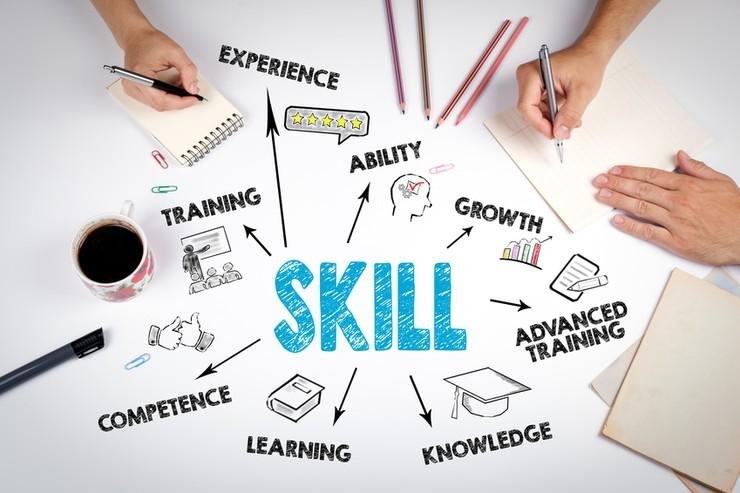
One of the biggest mistakes you can make when learning something new is judging your future by your current ability.
You may be a beginner today. You may struggle with concepts that seem easy to other people. You may look at experienced professionals and wonder how they became so good.
But your current skill level is not a prediction of where you will end up.
It is simply a starting point.
Every expert was once inexperienced. Every professional once struggled with the basics. Every person who appears highly skilled today had a period when they knew very little and had to learn one step at a time.
What separates many successful people from those who give up is not that they started with extraordinary ability. It is that they continued developing their ability after the initial excitement disappeared.
Being a Beginner Is Not a Weakness
There is nothing embarrassing about being a beginner.
The problem begins when you believe being a beginner means you are incapable of becoming good.
If you are learning to code, your first programs may be simple. If you are learning design, your first designs may not look professional. If you are learning business, your first decisions may be imperfect. If you are developing your communication skills, you may struggle to express yourself clearly.
That is normal.
You are not supposed to perform like an expert while you are still learning.
Your responsibility is not to be great immediately.
Your responsibility is to improve.
Skill Is Built, Not Discovered
Many people believe that successful people simply "have talent."
Talent can certainly provide an advantage, but skill is largely developed through deliberate practice, experience, feedback, mistakes, and repetition.
Someone who appears naturally talented may simply have spent years practicing something you are seeing for the first time.
Think about a developer who can build a website quickly. It may look effortless from the outside. But behind that ability are countless hours of writing code, solving errors, reading documentation, building projects, and learning from mistakes.
The speed you see today is often the result of experience you cannot see.
Do Not Compare Your Beginning With Someone's Middle
Comparison can destroy motivation when you use it incorrectly.
You see someone with years of experience and compare yourself with them after only a few months of learning.
You see someone running a successful business and compare it with your first attempt.
You see a professional developer building complex applications and become discouraged because you are still learning the basics.
You are comparing two completely different stages.
Instead of asking, "Why am I not as good as them?", ask:
"What can I learn from them?"
Turn comparison into education.
Study how they work. Analyze their process. Learn from their mistakes. Understand what skills they developed.
Then focus on your own progress.
Measure Progress, Not Perfection
Your improvement may be difficult to notice when you look at yourself every day.
That is why it is useful to look backward occasionally.
Think about what you could not do six months ago.
What concepts confused you?
What tasks were difficult?
What problems could you not solve?
What do you understand now that once seemed impossible?
You may discover that you have improved significantly.
Progress is not always dramatic.
Sometimes progress is simply understanding something faster than before.
Sometimes it is solving a problem without asking for help.
Sometimes it is recognizing an error immediately.
Sometimes it is having enough confidence to attempt something you previously avoided.
These small improvements compound.
Your Skills Grow When You Use Them
Learning without application has limits.
You can watch hundreds of tutorials about programming, but eventually you need to write code.
You can read dozens of books about business, but eventually you need to make decisions.
You can study communication, but eventually you need to communicate.
You can learn about design, but eventually you need to create something.
Knowledge becomes more valuable when you can apply it.
Do not wait until you believe you are skilled enough to start using what you have learned.
Use your current ability.
Build projects.
Take small challenges.
Solve real problems.
Create something.
Your projects will expose your weaknesses, but that is useful. They show you exactly what you need to learn next.
Your Weaknesses Can Become Your Strengths
The skill you struggle with today may eventually become one of your strongest abilities.
Perhaps you are currently uncomfortable speaking in front of people.
Practice.
Perhaps you struggle with mathematics.
Study.
Perhaps you find programming confusing.
Build smaller projects.
Perhaps you struggle with writing.
Write every day.
Perhaps you have difficulty understanding business.
Study businesses around you and learn how they operate.
Do not automatically label a weakness as a permanent limitation.
A weakness is often simply an area that has not received enough development yet.
Stop Using "I'm Not Good at This"
The words you repeatedly use about yourself can influence how you approach challenges.
When you say, "I'm not good at coding," you may unconsciously treat difficulty as evidence that you should quit.
Instead, change the statement:
"I'm still learning to code."
There is a major difference.
One describes a permanent identity.
The other describes a temporary stage.
You are allowed to be unfinished.
You are allowed to struggle.
You are allowed to learn slowly.
You are allowed to make mistakes.
What matters is whether you continue moving forward.
Give Yourself Permission to Improve Slowly
Not everyone learns at the same speed.
Some people understand concepts quickly. Others need more repetition.
That does not determine who will eventually become successful.
Someone who learns slowly but consistently can eventually outperform someone who learns quickly but refuses to practice.
Consistency creates compounding.
One lesson becomes knowledge.
Knowledge becomes practice.
Practice becomes skill.
Skill becomes confidence.
Confidence creates better opportunities.
And better opportunities can change the direction of your life.
Build Evidence of Your Growth
If you want to become better, create evidence.
Do not simply tell yourself that you are learning.
Build something.
Complete a project.
Solve a problem.
Publish your work.
Create a portfolio.
Take on a challenge.
Document what you have learned.
Every completed piece of work becomes evidence that you are capable of progressing.
This is especially important when motivation disappears.
On difficult days, you can look at what you have already accomplished and remind yourself that you are not where you started.
Your Future Requires a Better Version of You
The opportunities you want tomorrow may require skills you do not possess today.
That should not discourage you.
It should give you direction.
If the future you want requires better communication, develop it.
If it requires technical skills, learn them.
If it requires leadership, practice leading.
If it requires financial knowledge, study money.
If it requires discipline, develop better habits.
Your future may demand a stronger version of you, but you have time to become that person.
You do not have to become your future self today.
You only need to become slightly better than the person you were yesterday.
Keep Going
There will be moments when you feel like you are not improving.
There will be difficult concepts.
There will be failed projects.
There will be opportunities you miss.
There will be people who appear to progress faster than you.
Do not let temporary frustration become a permanent decision.
Your current skill level is a snapshot—not a sentence.
You are still developing.
You are still learning.
You are still capable of changing.
The person you are today does not have to be the person you become five years from now.
Your skills can grow.
Your knowledge can expand.
Your confidence can increase.
Your opportunities can change.
Your life can change.
But none of that happens by simply wishing for a better future.
It happens through learning, practice, discipline, patience, and consistent action.
Never confuse where you are with where you are going.
Your current skill level is not your final destination.
It is only the point from which you begin building the person you are capable of becoming.
Categories
- Make Money
- Product Review
- Social Media
- Excel
- Graphics design
- Freelancing/Consulting
- E-commerce and Digital Marketing
- Business
- Self Development
- Tips to Success
- Video Editing
- Photo Editing
- Website Promotion
- YouTube
- Computer
- Phone
- Music
- Spirituality & Faith
- School
- Tech & Digital
- Gaming
- News
- Digital Economy / Technology
- Relationship
- Real Estate
- Creative Arts & Design
- Medical
- Causes
- Networking
Read More
English language skills have become an important part of modern education and personal development. Students who build strong communication abilities from an early stage often find it easier to participate in academic activities, understand global information, and prepare for future career opportunities. An English tutor centre provides structured guidance, professional support, and a learning...

The Buffalo Costs seem in just line for at bare minimum 5 primetime NFL sport slots this Buffalo Charges glance within just line for at minimum amount 5 primetime NFL activity slots this period.A person of them contains previously been exposed with Leading Online video saying that it will kick off its Thursday Night time Soccer package deal inside of the Highmark Stadium opener upon September...

The global battery industry continues to expand as demand for reliable energy storage solutions increases across automotive, industrial, telecommunications, renewable energy, and backup power applications. Absorbent Glass Mat (AGM) separators play a critical role in valve-regulated lead-acid (VRLA) batteries by absorbing and retaining electrolytes while maintaining efficient ion transfer...

For decades, the formula for success was simple: get an education, secure a stable job, earn a monthly salary, and slowly build a good life. For many young people today, that formula no longer works. This generation is more educated, more connected, and more productive than ever—yet also more financially anxious. The problem isn’t laziness or lack of ambition. The problem is that...

A few years ago, many people believed you needed a shop, office, or expensive laptop before you could start making money. Today, things are different. Thousands of young people now earn directly from their smartphones — some as students, some while learning a skill, and some while unemployed but determined to improve their lives. The truth is, your phone can either be a tool for endless...